
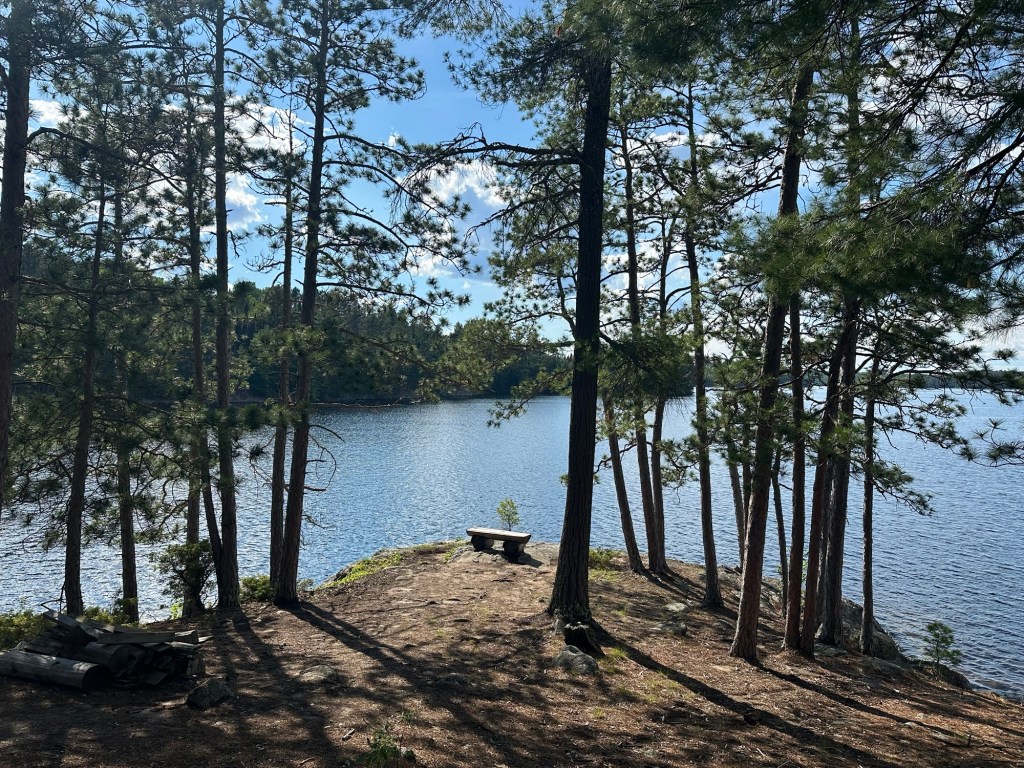
Visit Date: June 25, 2026
Are you looking for a place where you can boat, fish, camp, and maybe even see a moose, bear, or beaver? If you’re willing to drive about 4.5 hours north of Minneapolis, then I have the place for you!
Voyageurs National Park, located along the border of Minnesota and Canada, is one of the least visited national parks in the country, with 206,000 visitors in 2025 (for reference: Great Smoky Mountains National Park had 11.5M visitors that same year). It was established as a national park in 1975, and the land has a rich history with the Ojibwe people and French fur traders. It’s a very unique park as it’s primarily located on the lakes, with Lake Kabetogma being the largest. Because of this, the best way to explore the park is by boat, whether that’s a canoe/kayak, a National Park Service boat tour, or through a third-party company.
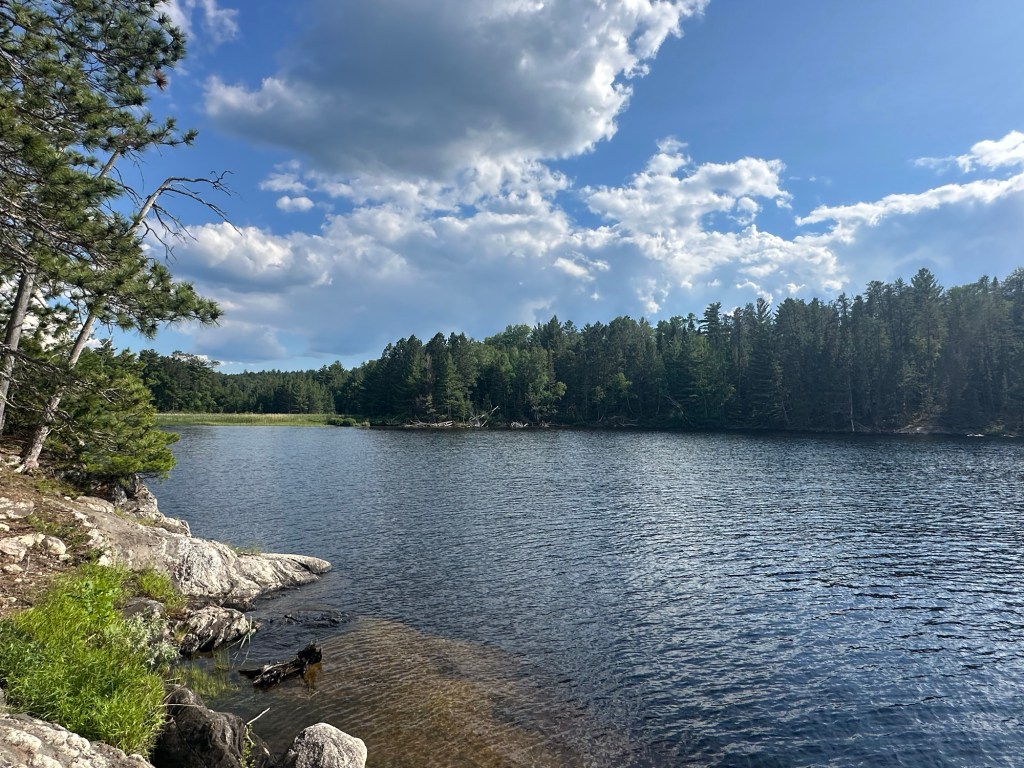
There is no park entrance fee, although because of the nature of the park, you should budget for some sort of water-based experience. While a popular, and frankly probably the best way, to experience Voyageurs is to set out on a boat and camp on one of the many island campsites, we’re not outdoorsy enough for that. Even without spending any time overnight in the park, you can still have an amazing time at Voyageurs National Park!
Here’s a breakdown of what we did in one day at the park:
Arrived at Rainy Lake Visitor Center: This is the largest visitor center in the park and a must-visit. There’s a small museum about the history and wildlife of the park, as well as a gift shop, information desk, and a short film theater. There were a variety of indoor & outdoor seating, as well as picnic tables to enjoy a packed lunch.
Additionally, this visitor center is home to several different programming events throughout the day. We happened to catch a presentation about the aurora borealis from a park expert who works for the Voyageurs Conservancy, and we were able to use his solar telescope to view the surface of the sun.
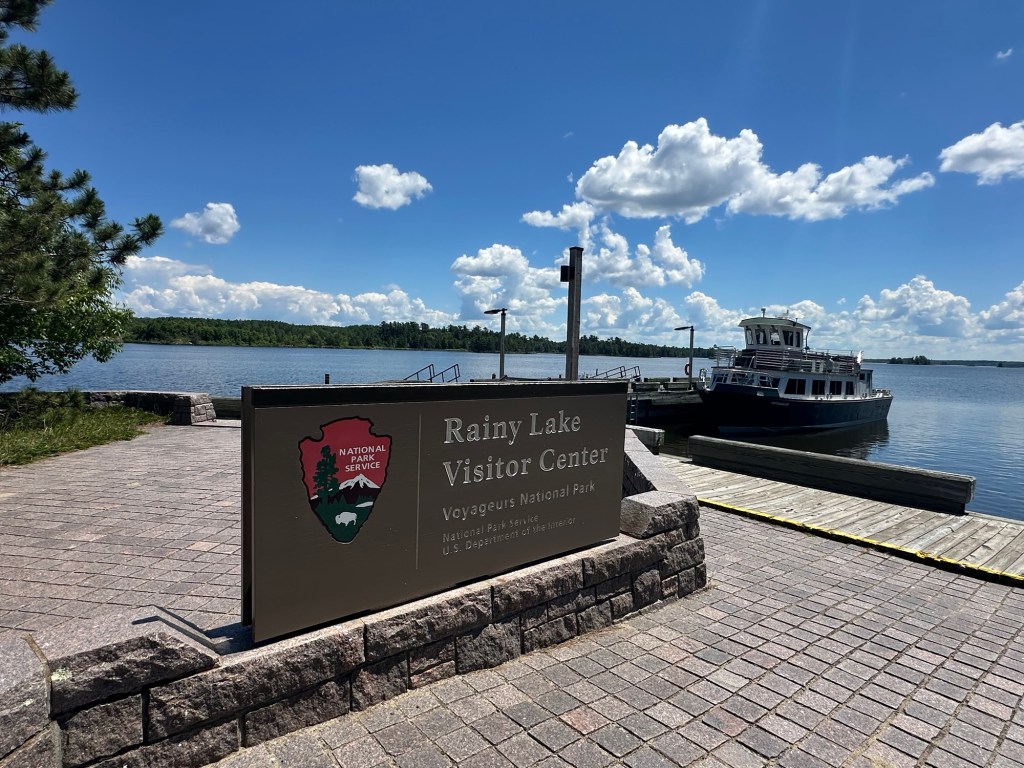
Rainy Lake Recreation Trail Hike (5.1 miles): This hike, if you can really call it that, was a paved trail along the main road into the park. I wouldn’t say that it offered any spectacular views, but it was pleasant with some nice wildflowers and trees alongside it, and I swear that I saw a fox or some other small mammal dart across the path at some point. This is not a must-do hike by any means, but if you’re looking for an easy, flat walk, then this is a good fit for you.
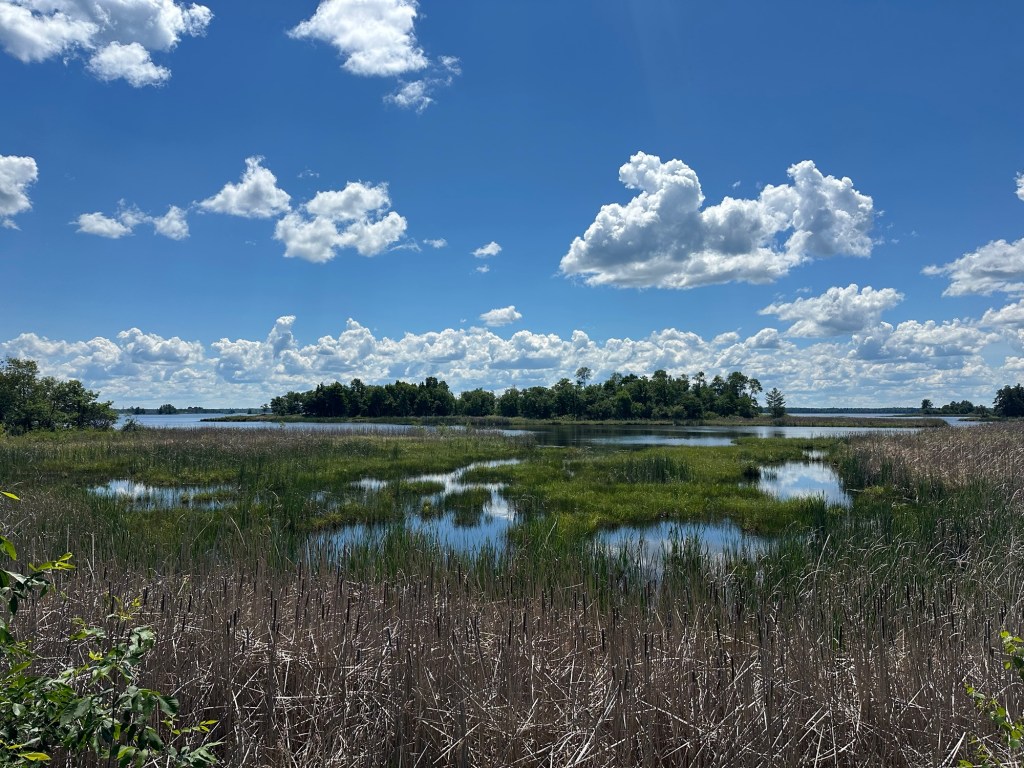
Oberholtzer Trail Hike (1.7 miles): As opposed to the recreation trail, this was more of a true hike. There was some very low incline, and while the trail was very well maintained, it was not paved. This offered some slightly better views of the lake.
We ended this trail by walking around the marina, and it was cool to see all of the boats coming, going, and docked. We also got to see some docked police and search & rescue boats. By going past the marina, we ended up by the visitor center for one last restroom break.
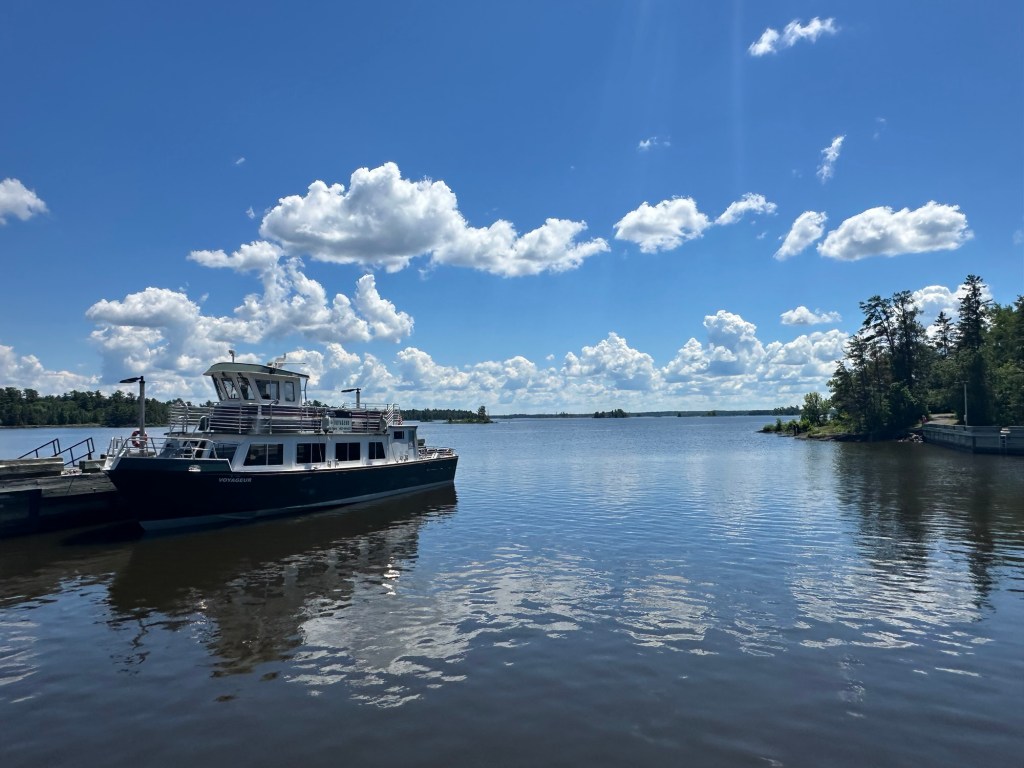
Arrived at Ash River Visitor Center: This was a significantly smaller visitor center than Rainy Lake (with less nice bathrooms), but it was home to a small gift shop, some exhibits, and a short film theater. It also offered some seating, both indoors & outdoors, to enjoy the view as we waited for our boat tour. The two visitor centers we visited are nearly an hour apart from each other, and there is a third one in between them called the Kabetogama Lake Visitor Center.
“Life on the Lake” Boat Tour: Because of the nature of the park, as I mentioned before, exploring the park out on the water is really essential for appreciating it as a national park. This boat tour, run through the National Park System and led by NPS rangers, was $50/person and lasted for 2.5 hours. Our tour ran from 4:30pm-7pm, and there were about 30 people on the tour.
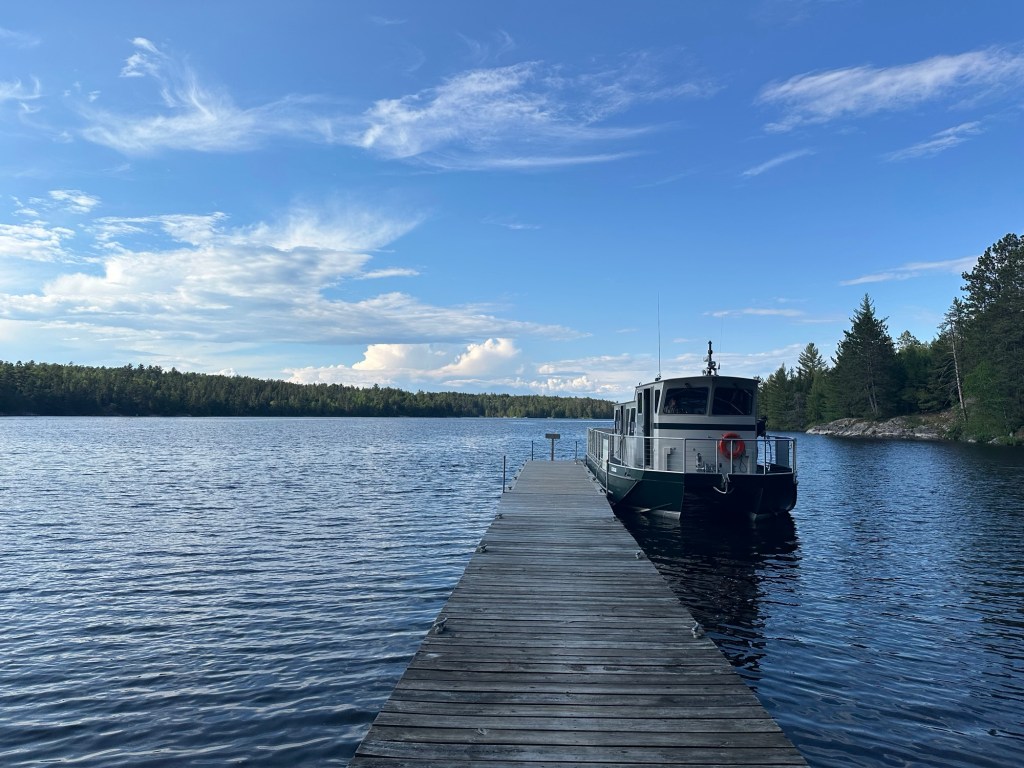
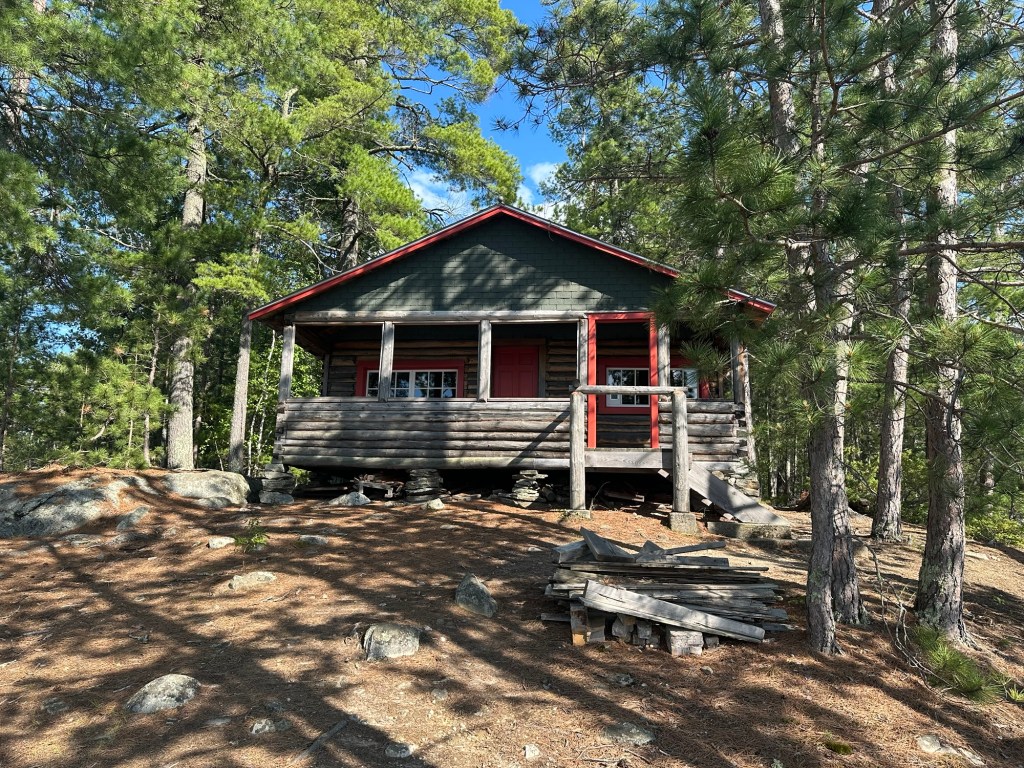
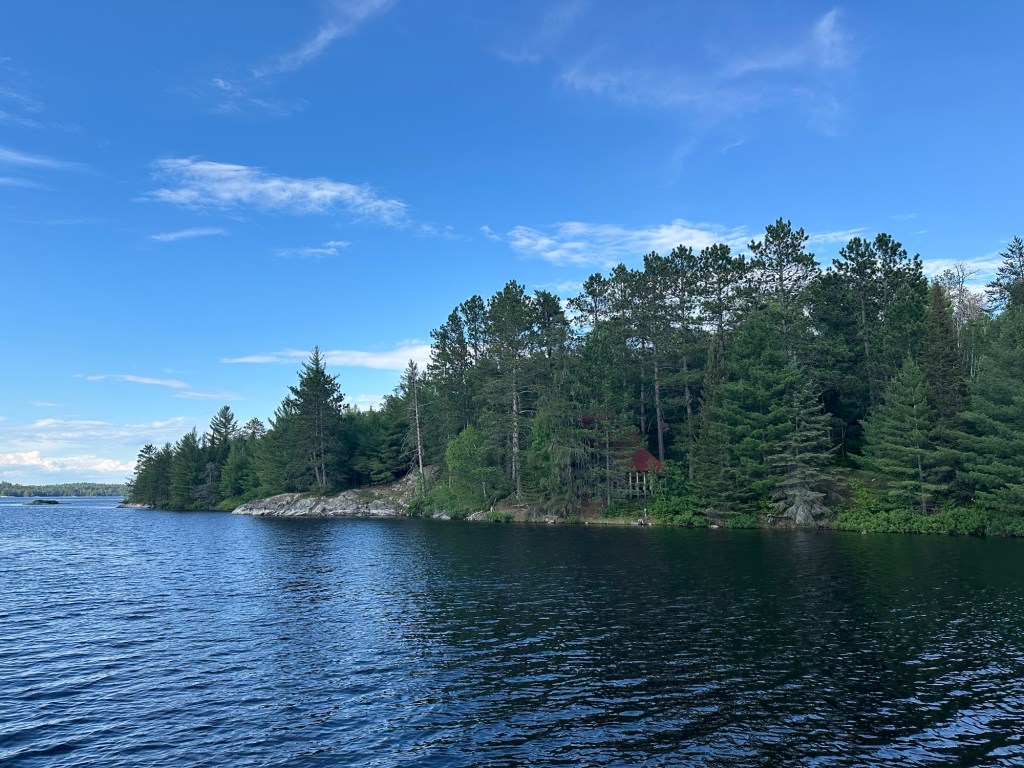
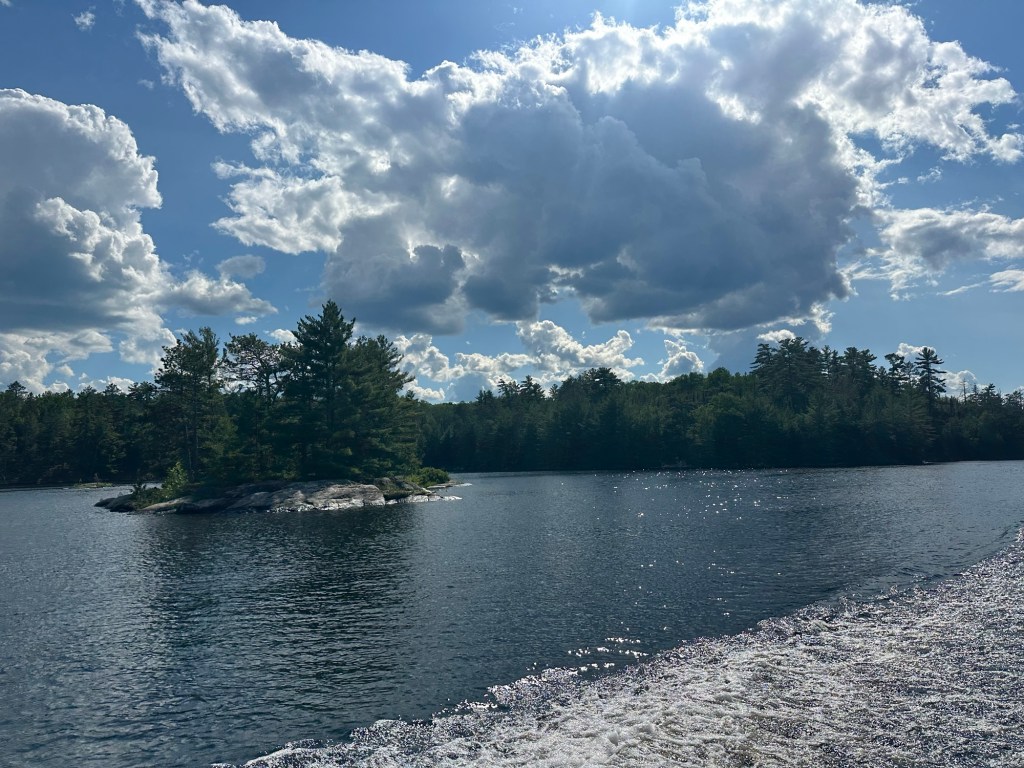
The NPS runs a few different boat tours throughout the week, and this one was focused on highlighting the Native Americans and early settlers who lived on the lands. We made stops on two different islands, each with some (currently) unused structures in a variety of conditions. It was interesting to see the islands, but my favorite part was being out on the water. The tour provided nice binoculars, and we spotted four bald eagles on our trip, although I’m sure it wouldn’t be uncommon to see other wildlife. We also saw people camping on their island campsites, and we exchanged some waves from across the water.
This tour, or just any boat tour, was a must-do for experiencing the park. If we were to ever return, I would be interested in checking out one of the other NPS tours, or even looking into a third-party tour for an even more personalized itinerary.
Where we stayed:
We spent two nights at The Nomad Motel, located just outside of downtown International Falls, which is the closest town to the park (12 miles from Rainy Lake and 39 miles from Ash River). The motel was one of the cleaner, nicer motels I’ve stayed in, and while it wasn’t anything very fancy, it got the job done of being a place to sleep with air conditioning.
While I don’t think I would stay here again (there are better places in town and closer to the visitor centers), I would still recommend it to anyone visiting the national park on a budget. With nightly rates under $100, it’s a hard deal to beat.
If you’re looking to camp in the park, be sure to check out the website and look into the fees and reservations required. There are a variety of different types of campsites available on different islands around the lakes, which can be accessed via motorboat or canoe/kayak. While most of the campsites require a boat, there are a few spots on the mainland.
Where to eat:
I was surprised at how developed International Falls is. It has a cute main street, with a few small businesses, including a very large gift shop/general store. While I was expecting for the town to be very small with only a few food options, there are a variety of different places to grab a bite, running from small diners to chains (McDonald’s, Dunkin, Subway, Dairy Queen, Dominos). One thing to note is that most of the local places closed early, some staying open only as late as 8pm. Depending on your plans for the day, you may have to eat at a chain (not our preference but sometimes it’s what the situation requires).
We ate breakfast at two different local spots: The Library and Coffee Landing Cafe. Both were cute and delicious. The Library was particularly unique because the insides were lined with books, all of which were donated and free to take!
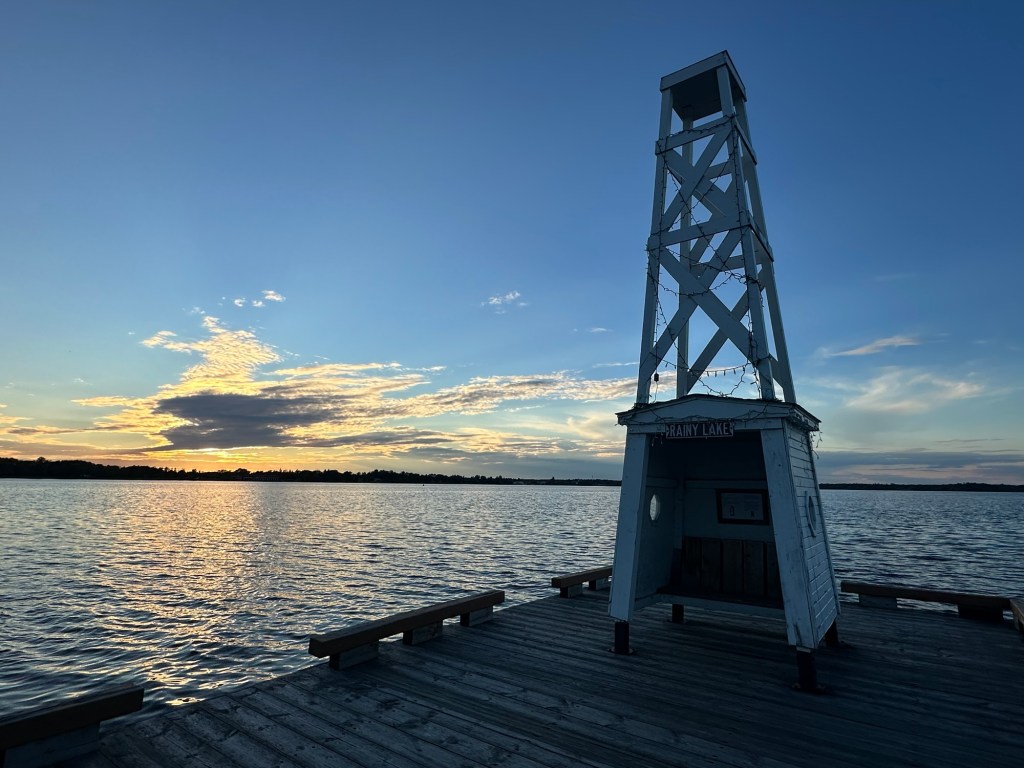
One of my favorite moments was driving a few miles outside of town to Tara’s Wharf Ice Cream Shop and enjoying a cone while watching the sun set on the lake. This was in an even smaller town called Ranier, which is where I would stay should I ever return again.
Something to note about Voyageurs National Park is that I have never experienced more bugs: mosquitos, flies, bees, etc. And while these are an important part of the ecosystem, remember to dress accordingly so they don’t become an annoyance to you. I was getting bit through my leggings! I recommend wearing long pants, tall socks, and a lot of heavy duty bug spray.
Additionally, when you’re planning your visit to Voyageurs, take a look at the National Park website and check out their schedule of events and boat tours. This park is an International Dark Sky Places location, and they offer special nighttime & stargazing programming but only during certain times of the year. And, if you’re interested in seeing the aurora borealis, be sure to do some research on the best times to visit to increase your chances. Also, the NPS does not run all of their tours everyday, nor do the same tours launch from every visitor center. Make sure you take a look at the tour schedule – there were certain experiences I wanted to book through NPS (like a canoeing tour) that were only offered on days we weren’t in the park.
Overall, Voyageurs has proven its worth to us as a national park! While it may not have the flashy views that other parks have, there’s something truly beautiful about being out on the water, enjoying the quiet, and experiencing this part of God’s creation.
WE WANT TO HEAR FROM YOU:
Have you even heard of Voyageurs National Park? Is this someplace you’re now interested in going to? Which national park should we visit next? Let us know in the comments!

 Small World Travel Blog
Leave a comment