
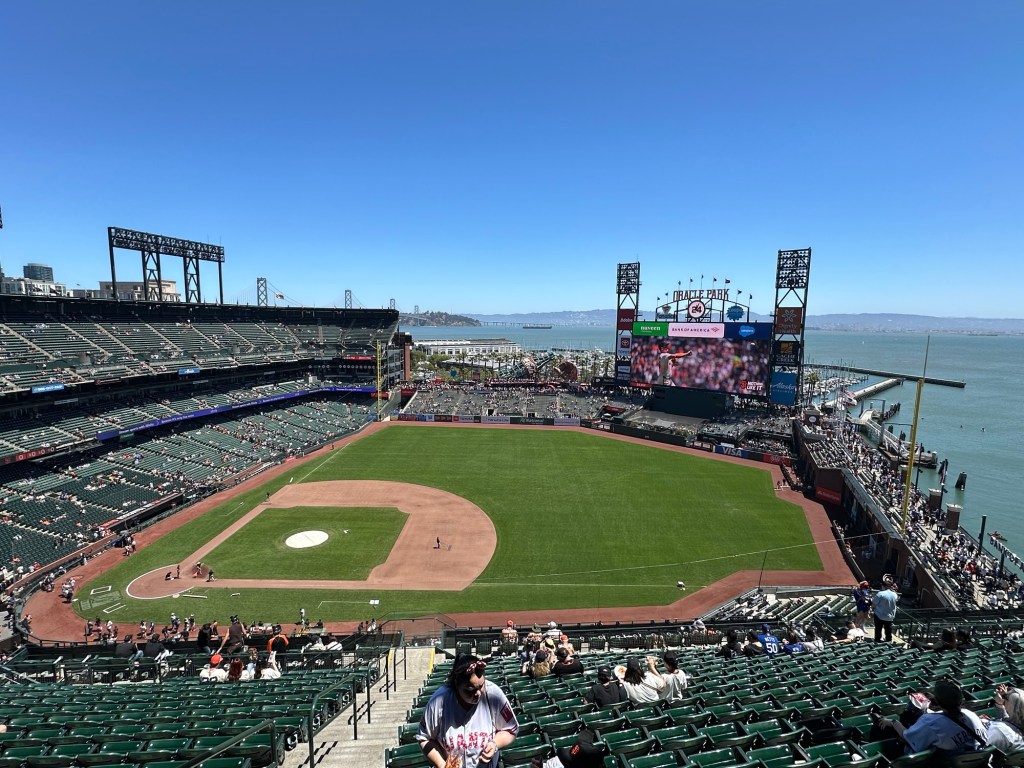
Visit Date: June 30, 2024
In our pursuit of visiting all 30 Major League Baseball stadiums, there were few that I was more excited for than Oracle Park, the home of the San Francisco Giants since 2000. It seemed like every single website I perused and every review I read were in unanimous consensus – this is a top five ballpark. With a beautiful backdrop of the adjacent San Francisco Bay and other eye-catching design elements, it’s pretty easy to see why it’s so applauded. So on a breezy Sunday morning, we made the walk down 3rd Street from our hotel to see if it lives up to the hype.
In the early 90s, the Giants were in a bit of a stand-off with the city of San Francisco in an attempt to replace the aging and ill-equipped Candlestick Park further to the south. A deal was in place for the franchise to relocate to Tampa Bay into what is now Tropicana Field, but the National League owners voted it down. All of this, of course, was about money, and I’m not sure there truly was any legitimate threat that the Giants would pack up and leave town. The real kicker is that, in an effort to help keep the team in the area, the Oakland Athletics granted their territorial rights to Santa Clara to the Giants in case they wanted to build a stadium there, a deal that blew up in their faces in the decades to come when they could not reach a ballpark deal of their own. Ultimately, the Giants ended up with a gorgeous location on the China Basin waterfront, while the A’s have since abandoned the East Bay for Las Vegas.
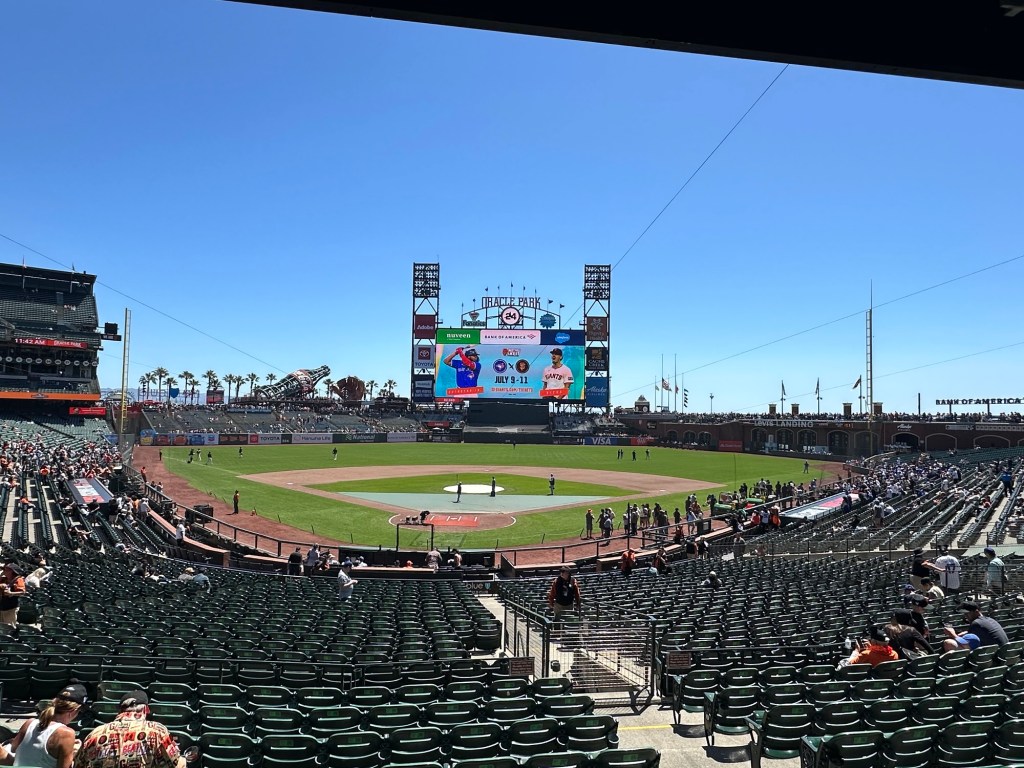
Another stadium that gets ranked pretty high on fans’ lists is our hometown ballpark, PNC Park, and I think it’s fair to view these two in a similar light. For starters, both have the same architect of HOK Sport (now Populous), and I think that’s relatively easy to see. Although Oracle Park is constructed of brick while PNC Park features limestone, there are otherwise a lot of parallels to be found between the two. Both have a high right field wall that allows for splash landings into the water beyond. Both have a quirky notch in the outfield and deeper fences that lead to more doubles and triples but less home runs. The outfield seating is minimized to place a higher emphasis on atmosphere and backdrops. And the concourses are generally similar, with open views of the field of play on the first level and lack thereof around the upper deck concession areas.
I don’t think it’s out of the question for these two ballparks to be #1 and #2 (whichever order) in your ballpark rankings. When I was growing up and would sometimes see Oracle Park ranked ahead of Pittsburgh, I felt this sense of jealousy that any stadium could somehow compete with what we have here at home. But as an adult, I’ve learned to see beyond my own preferences. By making all of these ballpark visits, I was able to narrow down what sorts of things I’m hoping for in a stadium. In doing so, I’ve come to find that there are indeed ballparks that I like better than PNC Park, and the home of the San Francisco Giants happens to be one of those.
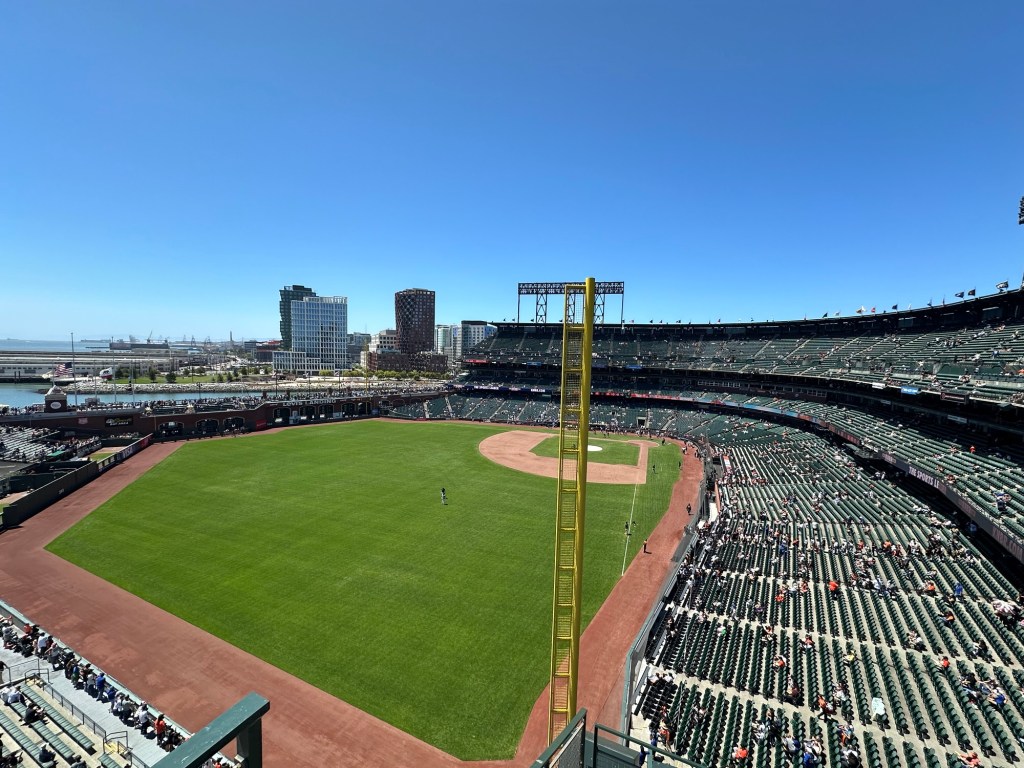
Whichever of these two stadiums you favor might come down to which backdrop you’re partial to, with San Francisco having the bayfront while PNC Park has postcard views of downtown along the Allegheny River. But I think fans have a tendency to get so caught up in the surroundings that they forget about all the other amazing things that these stadiums have to offer. Enough talk about Pittsburgh, though. This is a review of Oracle Park afterall, and as things currently stand, it’s my number two ballpark in the MLB. So while the comparisons between them are valid, this stop on our stadium chase is more than deserving of its own spotlight.
If you’re making a special trip out to San Francisco for a Giants game, you’ll soon discover that there aren’t a ton of hotels in the immediate area surrounding the stadium. The Hyatt we stayed in was one of the closest, and yet it was around a mile walk. There is another Hyatt right outside the ballpark, but that will put you a lot further from downtown and other popular tourist attractions. While there are definitely some areas of the city that were pretty rough, we loved San Francisco overall and even made another trip back the following summer. Oracle Park is in a relatively nice spot, especially the area around the water. After the game, we walked across the Lefty O’Doul Bridge into Mission Bay for dinner near the Golden State Warriors’ Chase Center, and this entire neighborhood felt very safe to us. The city also has a fantastic public transportation system, and there is a light rail stop between left field and home plate at King & 2nd Street.
As you approach from the outside, the architecture of the building is so inviting, capturing an old-school feeling in a sophisticated way. Most people would have a tendency to overlook the exterior design of stadiums since it’s not really impacting the baseball experience, but this one felt particularly grand, befitting the neighborhood and city around it. Along King Street, there are two 122-foot clock towers that bookend the block. The vintage feel of the brick work combined with the tall glass windows gives it some modern charm. And the Willie Mays Gate at home plate is one of the most beautiful main entrances that I’ve seen to a stadium, particularly at night when the neon orange lights come on. There’s a feeling of excitement and anticipation that you get just from being outside the walls of Oracle Park, and I’d love to take more time to do the full loop of the perimeter should I ever return.
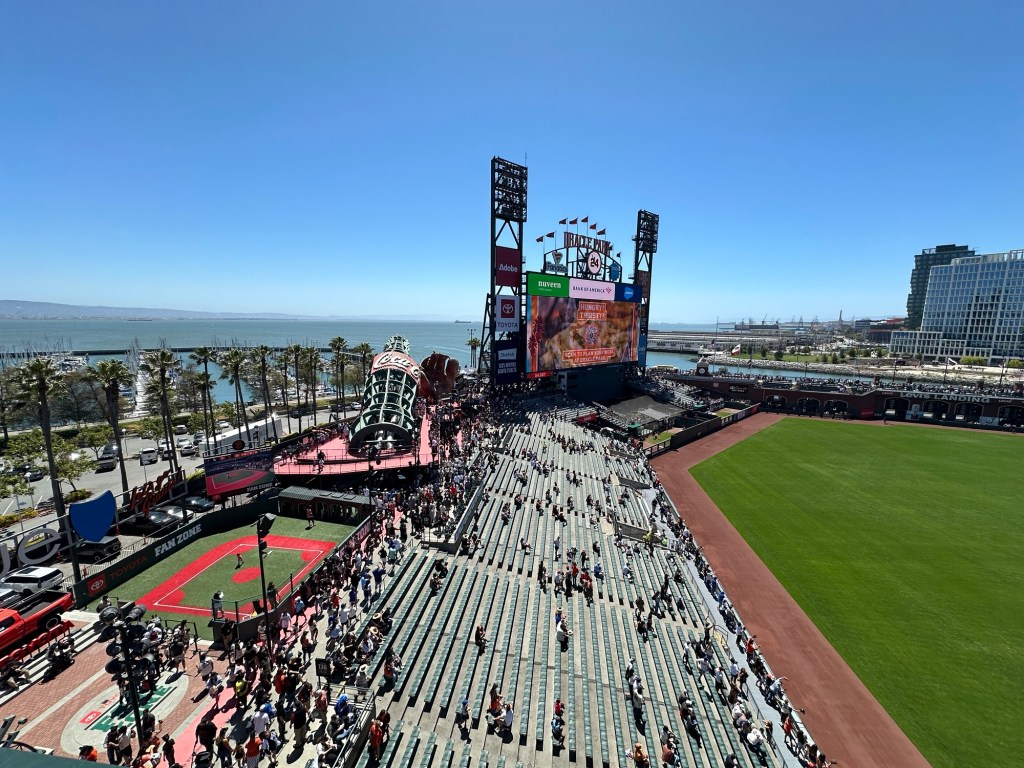
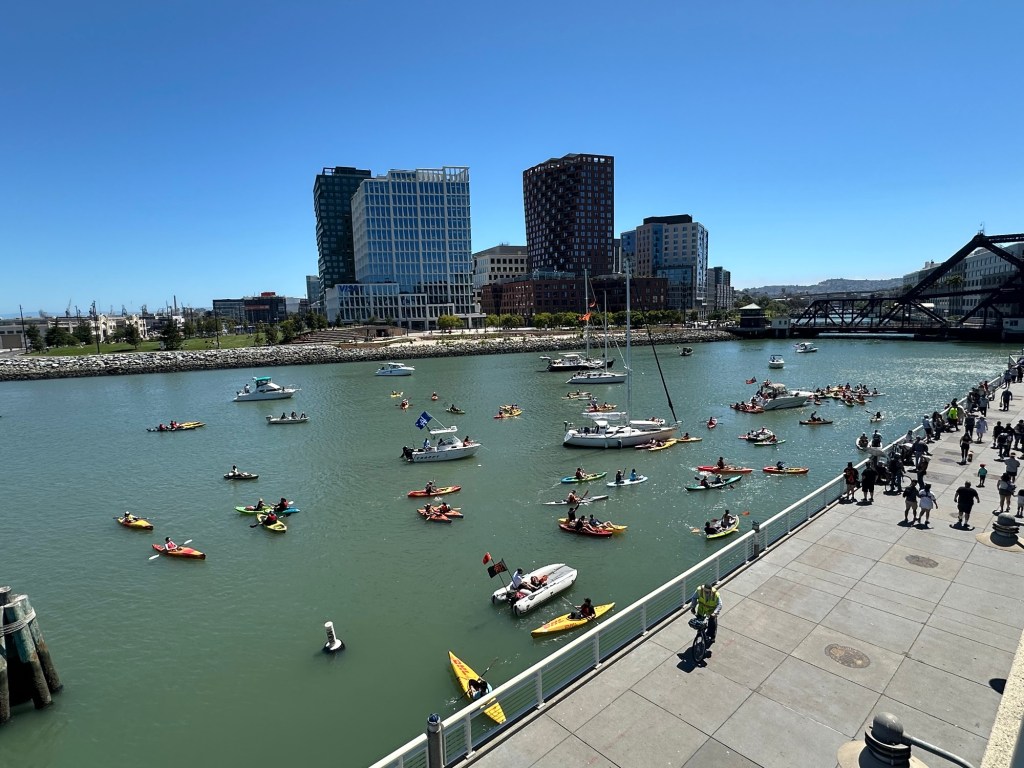
There isn’t really a designated ballpark district at Oracle Park, but there are enough bars and restaurants in the immediate vicinity to spend a pre- or post-game. Since we visited on a Sunday, we spent the morning at a restaurant called Town’s End Brunch just a couple blocks to the north, which was the perfect start to our day. We made a reservation since gameday brings larger crowds, and no matter where you choose to eat around the stadium, it would be wise to do the same. One thing I regret about our visit was that we didn’t walk along the San Francisco Bay Trail outside the ballpark beyond right field. From the pictures and videos I’ve seen, it’s a cool perspective along the bay, especially with the water taxis that sail into the dock in center field and all the kayaks out in McCovey Cove. If I ever come back, I’d love to enter at the Marina Gate behind the scoreboard solely because of the added atmosphere of being around all the boats.
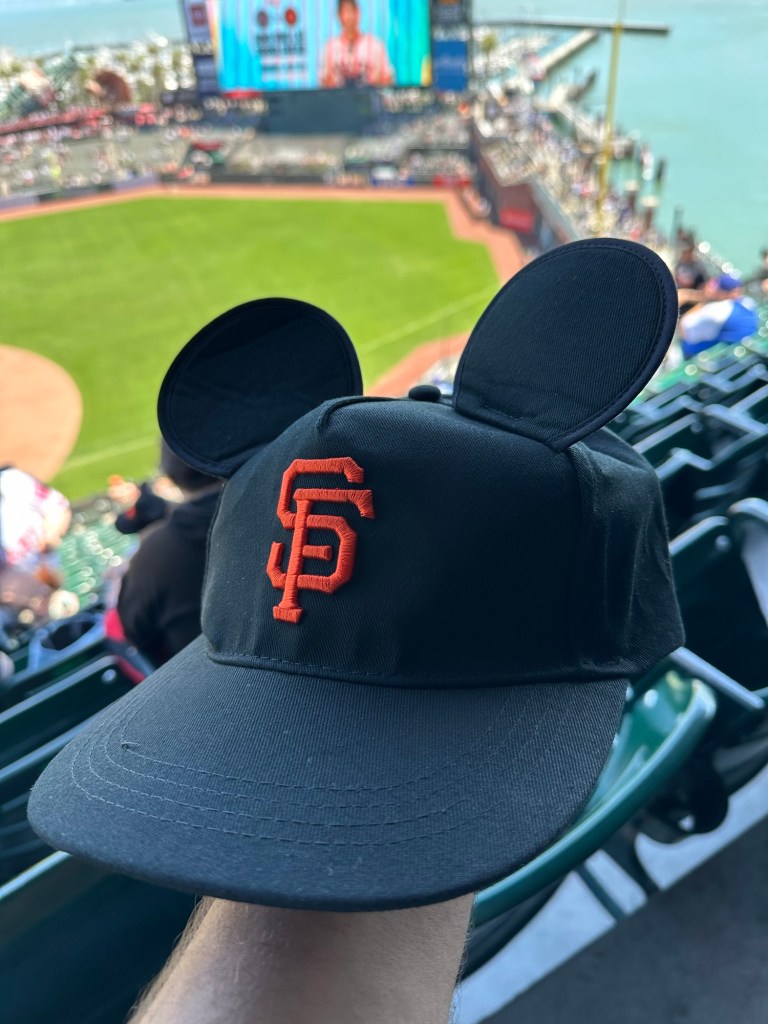
Speaking of gates, we encountered extremely long lines when we arrived despite being over 30 minutes early, but that’s because they were giving away a Mickey Mouse-themed Giants hat that day, which was obviously a hot commodity. I can’t imagine things would be this hectic otherwise. No one from security was policing the lines, so things did get a bit out of hand with line cutting. Otherwise, we moved fairly quickly and soon found ourselves in the main concourse along the third base line.
I thought the walkways around the stadium were probably the weakest aspect of Oracle Park, but that doesn’t mean they’re bad by any means. Most notably, I found the lower concourse to be much narrower than the average ballpark, causing some backups to form as we made our laps (more on that later). You do have the field of play in view for nearly the entire loop of the 100-level, plus you can escape the concession crowds a little bit by staying on the opposite side of the brick pillars. I felt like this area was somehow lacking in natural light despite the open environment, which obviously isn’t a huge deal, but it made it a little gloomier to me even with the on-field action still visible. The upper deck concourse was standard, with the concessions under the stands and no views of the field other than the tunnels out to the seats. While we didn’t try a ton of food, some of the noteworthy options are the garlic fries, crab sandwich, bacon wrapped hot dogs, and a wide variety of Asian options (which should come as no surprise, given the important role these communities have played in the history of San Francisco).
This is one stadium where I would absolutely recommend a seat in the upper deck rather than one closer to the field of play. To me, it all comes down to the immaculate views of the surrounding area. The further & higher you can get down the first base line and into right field, the better. This really widens your perspective of the entire San Francisco Bay, the Bay Bridge, and portions of the city center. The palm trees beyond the outfield walls give that extra, finishing touch to a picture-worthy view. I think it’s easily a top-five backdrop in Major League Baseball. You have to be careful about the upper deck though, because the opposite corner closer to the left field foul pole are probably the worst seats in the stadium, with obstructed views of the outfield the higher up you get. Just make sure you check out the seat preview online before you pull the trigger on any tickets.
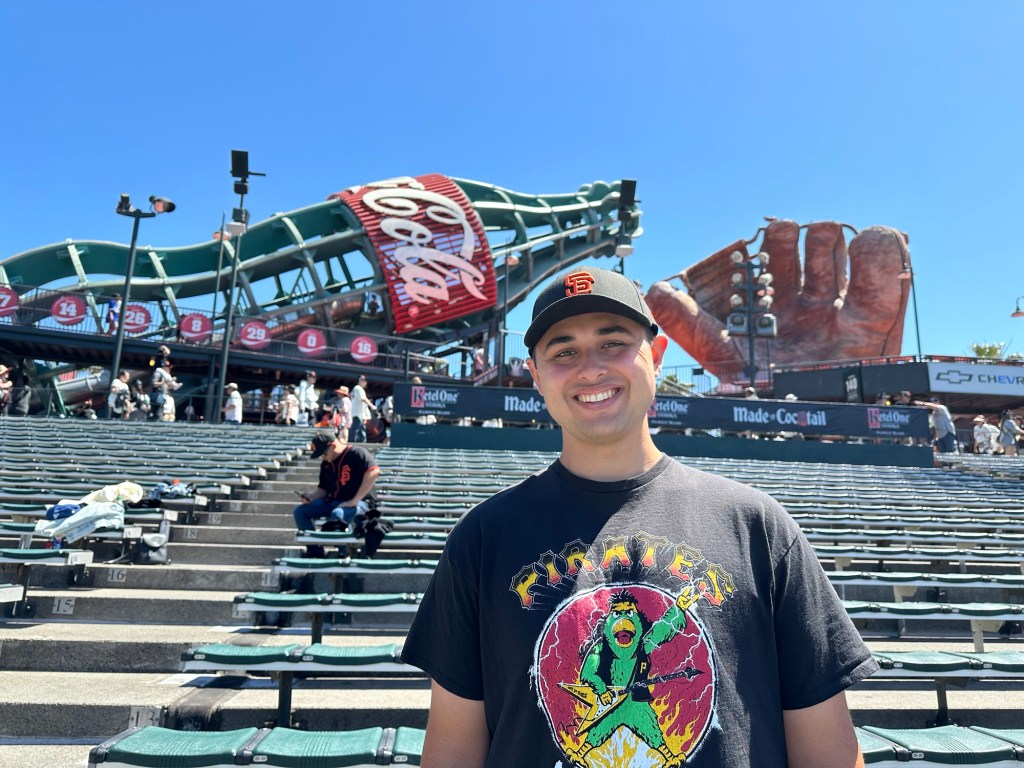
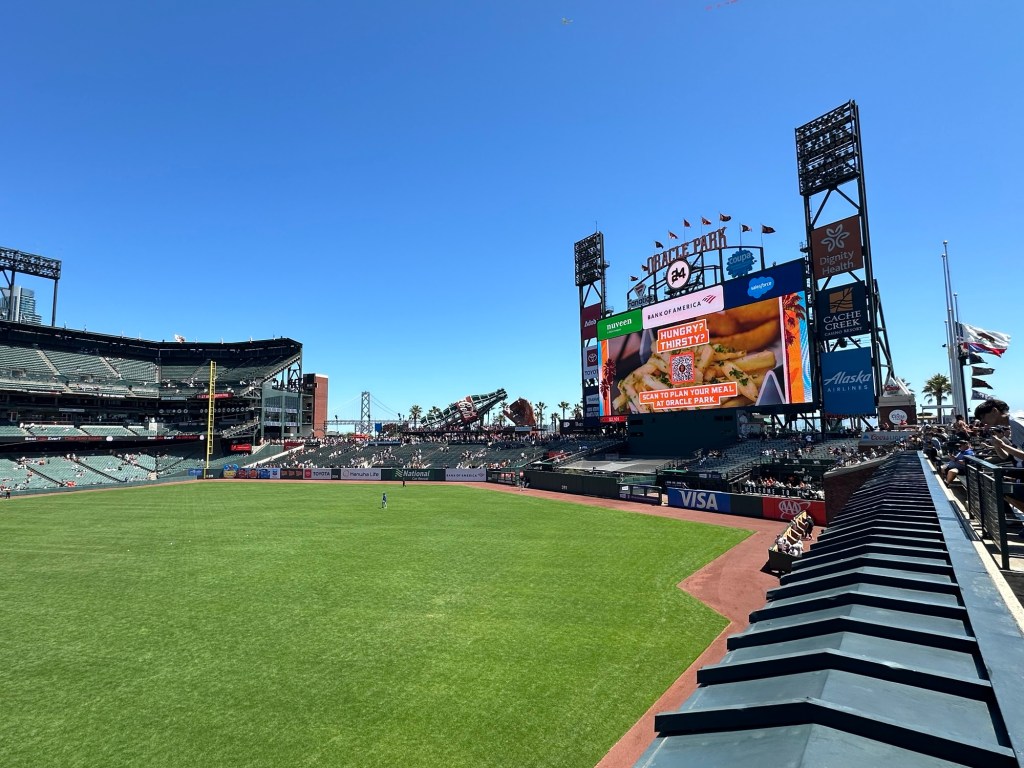
The entire outfield is really the gem of Oracle Park. Let’s start in left field, otherwise known as the Coca-Cola Fan Lot, which features a giant 80-foot Coke bottle and an oversized four-fingered baseball glove. These two icons of the stadium are what I was most excited to see on our visit, but it wasn’t until I got an in-person glimpse that I discovered the bottle is actually a giant slide! One of my favorite pictures of myself was taken with these sculptures as the backdrop, so I’ve made sure to include it below. I could understand if some people found these to be an eyesore, over-the-top, or gimmicky, but I love the uniqueness that they bring to Giants games. This corner of the park also has a miniature baseball diamond for kids to run around on.
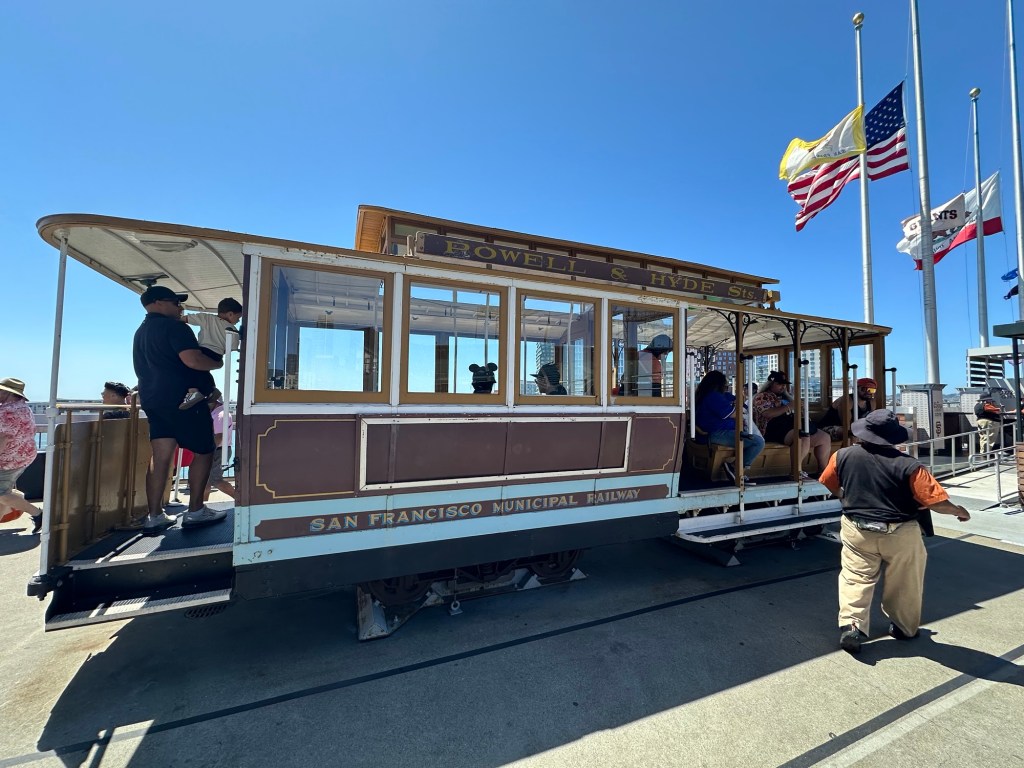
Continuing around the outfield, you’ll find there is a lot to do in center field. I personally loved the Hall of Bobbleheads, given the huge collection I have at home. There is also a retired cable car for you to check out. Directly behind the scoreboard is a plaza area featuring a wide range of concessions. There is a large set of stairs nearby that you can take below the bleachers and into a space known as The Garden. This sprawling space is open to all ticket holders, educating guests on sustainable food practices and healthier eating. When the bullpens were moved from foul territory to the outfield, the team created opportunities for fans to get closer to the pitchers warming up. It was cool being on field-level to watch the game, so even if you aren’t interested in the food, I’d still recommend you make a stop over here.
Returning to the 100-level, we’ve reached Levi’s Landing, the sections of seating above right field. While it doesn’t come with the same height or notoriety as the Green Monster, I still hold it in high regard. Due to odd configurations from the bay, the foul pole is only 309 feet from home plate, but on the far end of the wall, it reaches all the way to 415 feet. Being that the wall is also 24 feet tall (in honor of Willie Mays), it’s difficult for batters to hit home runs in this corner of the ballpark, earning it the nickname “Triples Alley”. There is a “Splash Hits” tracker on the wall that counts how many players have homered into McCovey Cove on the fly. Those lucky enough to reach this accolade will find their ball quickly scooped up by one of the many kayakers out in the water. You should definitely try to watch some of the game from the standing-room only spaces atop the wall, if not go all-out and buy tickets to the limited seating options.
I only had one negative experience in our visit to Oracle Park, and that centered around traffic jams in the outfield. Levi’s Landing can get pretty crowded during a busy game, but they have enough ushers in place and plenty of markings on the floor to manage the flow of people. Still, we had some trouble moving through this space while the game was ongoing. However, that doesn’t even compare to the headache we encountered in left field. Due to huge lines for the miniature field and the slide, people being held by ushers at the tops of their sections during at-bats, and it being a good time to grab a bite to eat, we got stuck in a blockage that lasted through the entirety of the top of the fifth inning. There was nowhere to move. People had piled up heavily behind us, but the majority of the crowd was coming from the opposite direction. I stood there wondering if this is a problem every game, or if this was the combination of a Sunday crowd and the Dodgers being in town. Nevertheless, this experience was not a pleasant one, and I hope that this is not the norm for this narrow walkway.
One other aspect of San Francisco that you must be cognizant of when buying tickets is the weather. Having never been there before this trip, I assumed that it would be a pretty warm city in the summer months. However, that’s not the case. In my two separate trips to the Bay Area, temperatures have hovered in the mid-60s with a nearly constant cool breeze. On this day in particular, it seemed even windier, and being in the upper deck only made us chillier. When we were walking down to The Garden area out in center, it was gusty enough in the tunnel that it blew my hat off and sent it rolling towards the plaza. Luckily, there was no fog present on this day, but it could definitely impact your visit to the city if you come at a bad time. If it’s heavy enough, you can kiss that view of the Bay Bridge goodbye. I would take fog and wind over a rainy game any day of the week, and while it’s unlikely that you’d experience the latter at a Giants game, you have to make sure you prepare for the climate.
The weather and foot traffic aside, Oracle Park truly is a special place – maybe even the best ballpark that we’ve visited. It does a phenomenal job of cultivating a fun, inviting, and memorable gameday experience with all the different amenities and unique features, especially in the outfield. But the quirks of the field itself, with such a deep outfield and unpredictable bounces off the tall brick walls, are reminiscent of the character and charm of fields-past, like the Giants old New York home at the Polo Grounds. The team has gone to great lengths to ensure that the baseball environment is at the forefront and that everything points back to the game on the field, but that you’ll have an amazing time while seeing it unfold. You’d be hard-pressed to find a ballpark in America that truly captures the essence of its city better than Oracle Park does with San Francisco. After over 25 seasons, it too has become a quintessential part of the Bay Area. Old school venues like Fenway and Wrigley are at the top of many stadium chaser bucket lists and serve as major tourist destinations in their respective cities, even for non-baseball fans. This ballpark should be in that same conversation. There’s no doubt in my mind that it will stand the test of time just like they have, continuing to orchestrate the story of America’s Pastime for generations to come.
WE WANT TO HEAR FROM YOU:
Thank you for reading the 13th entry in our MLB Stadium Tour series on Small World Travel Blog. Please consider subscribing for more content like this! Do you think Oracle Park deserves its place in the conversation for best ballpark in America? Is there anything else we might have missed on our visit that you’d want to highlight? Let us know in the comments, along with which ballpark you would like us to review next!


Leave a comment