
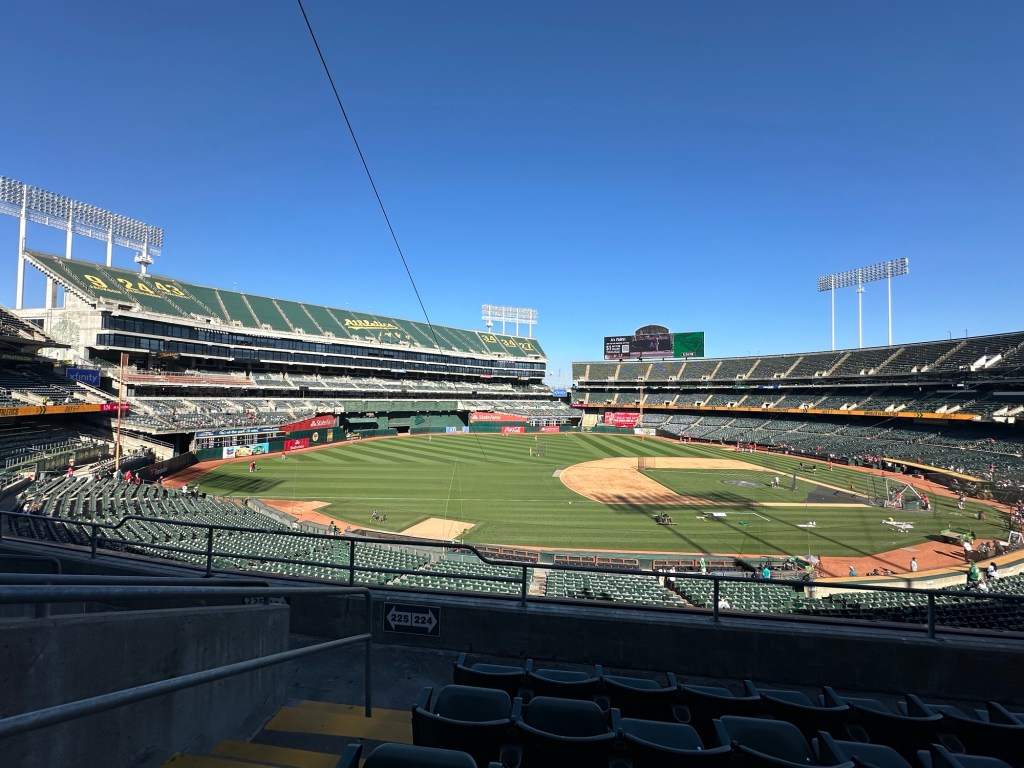
Visit Date: July 2, 2024
What you’re about to read isn’t a ballpark review. It’s an obituary. If you haven’t seen a baseball game at the Oakland-Alameda County Coliseum, barring an act of God on par with Lazarus, you never will. The Oakland Athletics are long gone. So, too, are the Oakland Raiders. The lure of Las Vegas and its endless possibilities were too much to resist. The rich owners get richer. But the fans suffer.
Relocation is the biggest tragedy that any sports fan can face. Heartbreaking losses are inevitable. Players will fail to live up to their potential. Coaches will make horrible decisions. But despite all of that, your favorite team will always be there for you, giving you that glimmer of hope that has you loyally coming back each season. But what if your favorite team wasn’t there for you anymore? What if they abandoned you after you followed them through thick and thin? Fans across the East Bay loved the A’s, but the A’s ownership didn’t reciprocate those feelings anymore.
Sadly, this wasn’t the first or even the second time that the Athletics baseball franchise has packed up for bigger and better things. They started out in Philadelphia in 1901, winning five World Series championships under Hall of Fame manager Connie Mack. In an effort to drive westward expansion and capitalize on untapped markets, the team moved to Kansas City in 1955. But they never truly intended to stay for long. Besides the lackluster stadium in KC, there also wasn’t the same money to be made as there could be in California. So in 1968, the team settled in Oakland, California. What followed were the highest of highs and the lowest of lows.
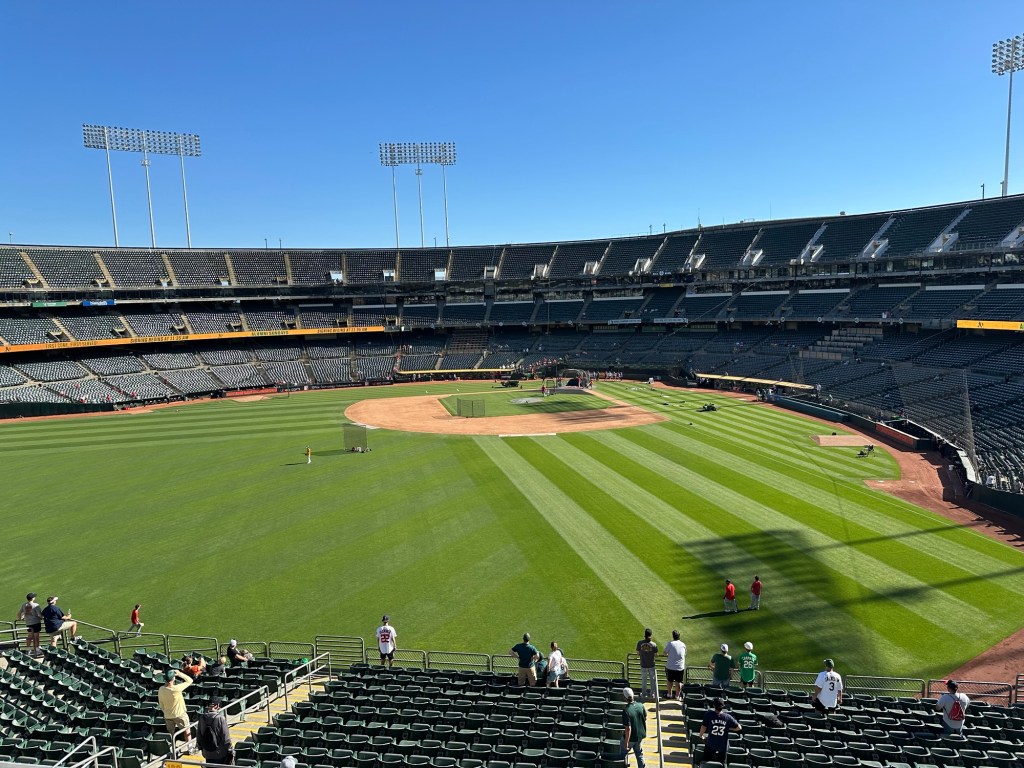
The Oakland-Alameda County Coliseum has gone by many names over the years, none of which are worth listing here. From here on out, I’ll just shorten it to the universally agreed-upon Oakland Coliseum (no offense to the residents of Alameda County). The stadium first played host to the Raiders beginning in 1966 before the A’s arrived two years later. The cookie-cutter design was just like other multi-purpose stadiums of the era, but instead of being entirely enclosed, the outfield sections were shorter in order to provide views of the Oakland Hills. Both franchises had great success in the 1970s, with the Athletics winning three straight World Series from 1972-1974. All good things must come to an end, though. As became a pattern with future owners, the team sold off their big names for financial leverage.
The Oakland Raiders, owned by visionary-or-villain Al Davis, had recently won two Super Bowls when the team fled the Coliseum for Los Angeles in 1982. After failing to add luxury boxes to the stadium, he decided they’d be better off in Southern California. He said of the Oakland fans, “In their mind, it’s their team. In my mind, it’s not.” As A’s fans would one day discover, Davis wasn’t the only owner in the city who would feel this way.
The Athletics saw great success in the late 80s and early 90s, appearing in three straight World Series and winning one, against the crosstown rival San Francisco Giants in the aftermath of the 1989 Loma Prieta Earthquake. In 1995, the Raiders would return to Oakland. However, it came with a catch. The Coliseum would be expanded, with a 20,000-seat renovation replacing the open outfield sections. This gargantuan expansion, which hung menacingly over center field, would earn the nickname ‘Mount Davis’. At that point, it was obvious: the Coliseum was about football first and foremost.
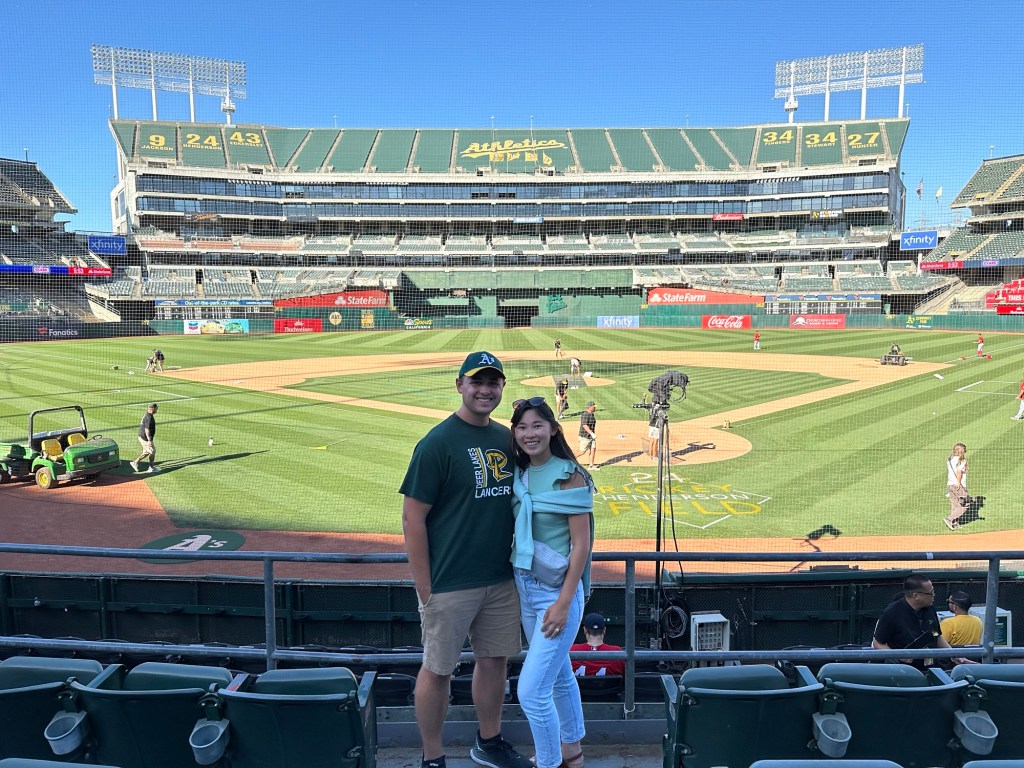
In 2006, the A’s started placing tarps across the entire upper deck of the stadium (including Mount Davis), reducing it by over 20,000 seats in an effort to make the Coliseum feel more intimate. Simultaneously, they created the smallest ballpark capacity in Major League Baseball. It wasn’t until 2017 that the third deck was eventually reopened, but Mount Davis remained tarped.
Most multi-purpose stadiums were replaced near the turn of the century as most cities recognized the need for separate facilities for their football and baseball teams to be healthy and sustainable long-term. The A’s were behind the eight ball, with failed attempts to move to nearby Fremont and San Jose. In 2014, the Athletics signed a ten year lease agreement to continue playing at the Coliseum. Meanwhile, the Raiders had one foot out the door. They first tried (and failed) to complete a joint relocation to Los Angeles with the San Diego Chargers before announcing a move to Las Vegas for the 2020 season. Obviously, Oakland fans were devastated to once again lose their beloved football team, but at least they still had the A’s. The baseball team was pursuing a stadium site in nearby Howard Terminal and had backing from the city to make it happen. The ball was in the court of owner John Fisher. But things began to stall.
Major League Baseball advised the franchise to start looking at alternatives beyond Oakland. Despite Fisher’s assurances that the Howard Terminal plan was his top priority, news broke that the team had purchased land off the Vegas Strip and were committed to relocation. They formally announced that they would be building a stadium on the site of the Tropicana Las Vegas, which received unanimous approval from other MLB owners in November 2023 despite having no formal knowledge of where the team would play in the interim, how the stadium was being financed, or when it might open. Remember, the lease at the Coliseum would end in 2024, but at this point, they couldn’t reach an agreement with the city on an extension.
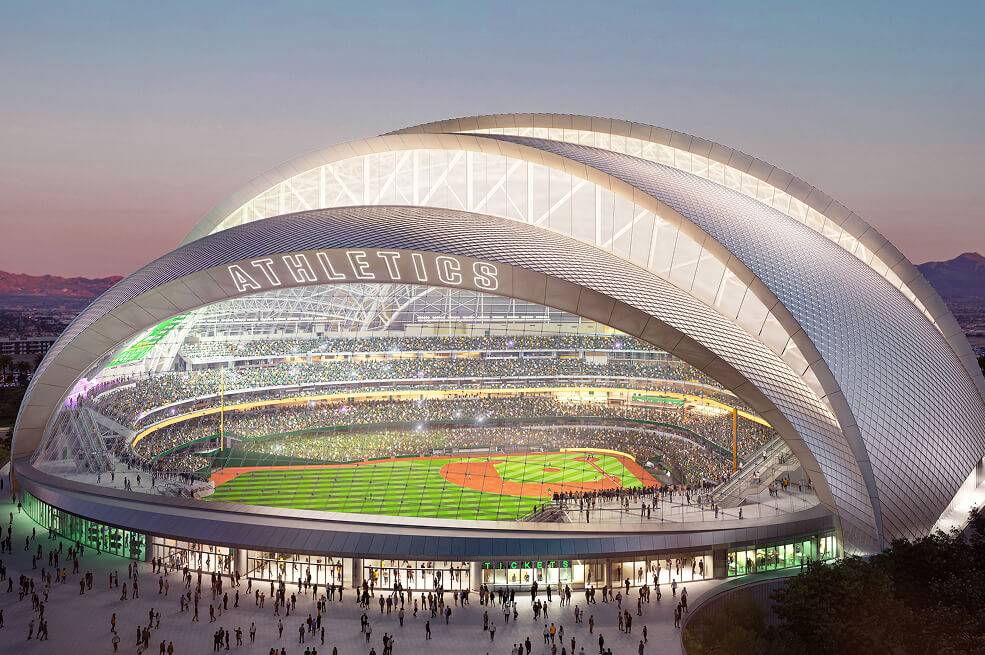
Just like that, it was over. The 2024 season would be the Athletics’ last in Oakland. Nothing was going to stop John Fisher, be it a “reverse boycott”, chants of “sell the team”, or threats from the city that they would try to restrict the team from taking the Athletics team name with them. Even without all the funding secured, it was full steam ahead. In the meantime, the team announced that they would play at Sutter Health Park in Sacramento from 2025-2027, even though it only has a capacity of around 14,000.
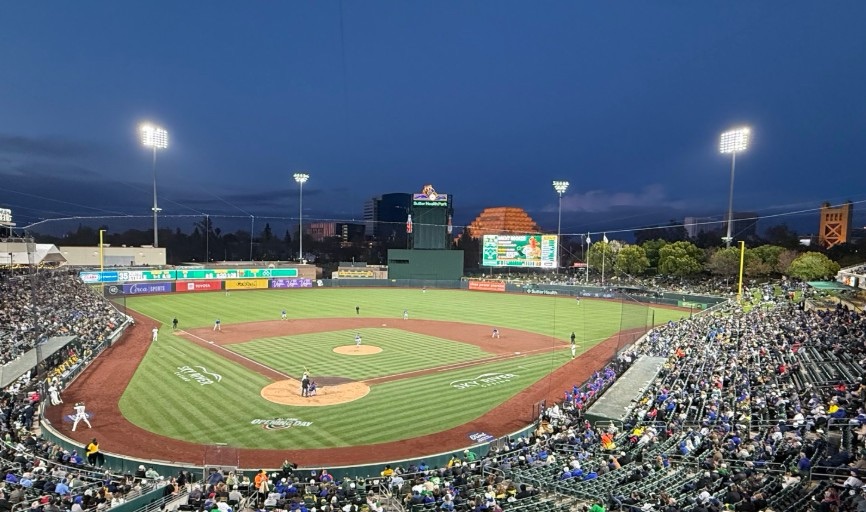
Against this historical backdrop of MLB’s first relocation in 20 years, I insisted to Martha that we should visit the Oakland Coliseum in 2024 before it closed for good. I had heard so many horror stories about “Baseball’s Last Dive Bar” that I had to see it for myself. Sewage issues, possums living in the press box, and barbed wire fencing were just some of the many problems plaguing this once-proud structure. More importantly, I wanted to be there to take in the fan environment. How many people would show up? Would there be a lot of apathy surrounding a struggling team that was already on its way out? What would the guest experience be like? All of these thoughts kept running through my head in the lead-up to the game.
We stayed in Downtown San Francisco and took the BART (their subway system) straight to the stadium from there. Sadly, it was a pretty rough scene looking out the windows along the route. This definitely goes down as the worst urban blight I’ve ever witnessed, with homeless camps stretched across numerous parking lots and street corners. These carried on almost the whole way up to the stadium. So it made me wonder if saving the A’s was really worth Oakland’s time and effort. Why earmark hundreds of millions of dollars in public spending for your baseball team’s future home when you have countless residents in need of homes themselves? In that way, I’m sort of glad that John Fisher is moving the team if it means that Oakland can reallocate those resources to serve people who actually need them.
The train dropped us off at a convenient pedestrian bridge that led straight to the stadium entrance. Despite the fact that they would soon be out of a job, all of the stadium employees that we encountered were in good spirits. The thought kept running through my head about what might be next for these people, some of whom had worked at the stadium for decades.
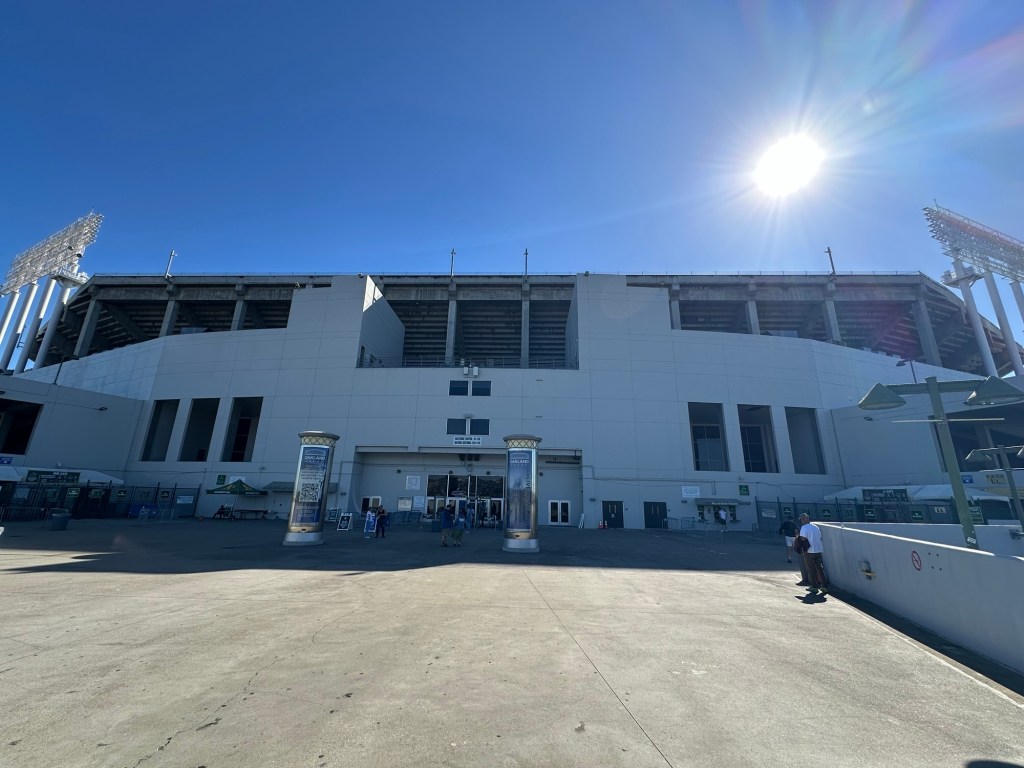
My first impression of the outside of the stadium (and the inside too) was that the place was an absolute dump. But to A’s fans, it was THEIR dump. Even though they knew the ballpark was a mess and needed to be replaced, they could take pride in the success the team experienced there and all the wonderful memories they made along the way. The exterior of the building was pretty nondescript, with nothing particularly interesting to look at. It was concrete as far as the eye could see.
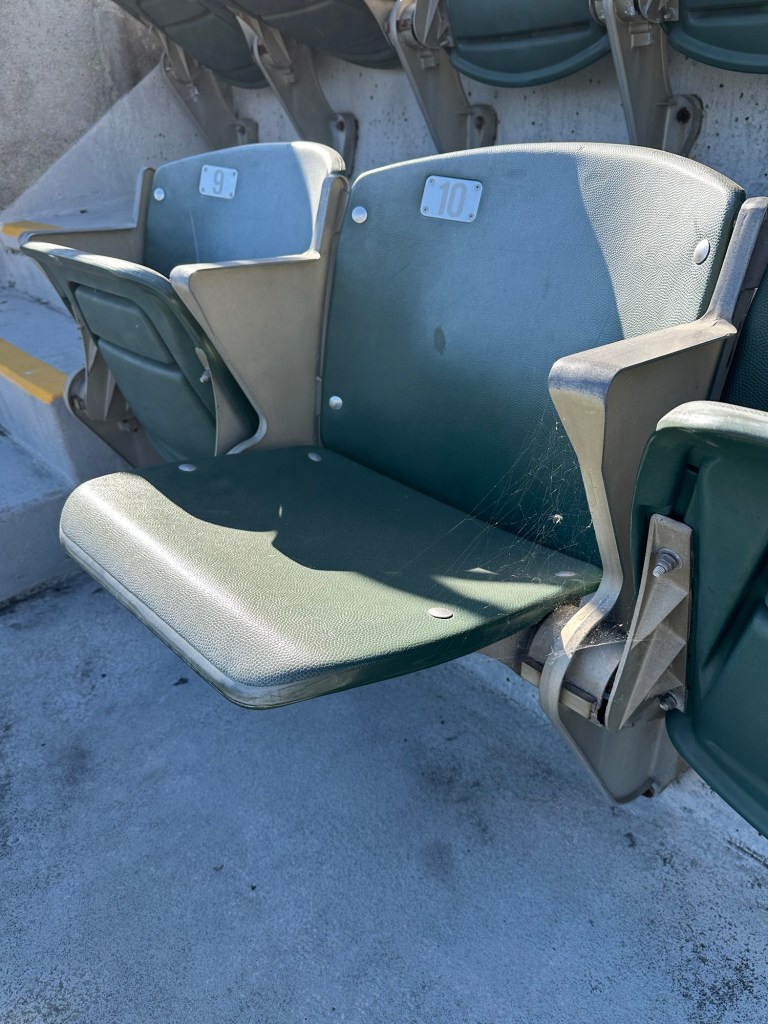
We did our customary lap around the stadium, and because we were there so early, the place felt like a ghost town. We were seated on the second deck in section 224, and quickly discovered that most of the chairs around the stadium were covered in spider webs and dust, as if left abandoned for decades. Even at PNC Park, I find spiders here and there. The Coliseum, however, felt like an infestation. Sadly, though, this kind of thing was expected, and it was hard not to laugh about.
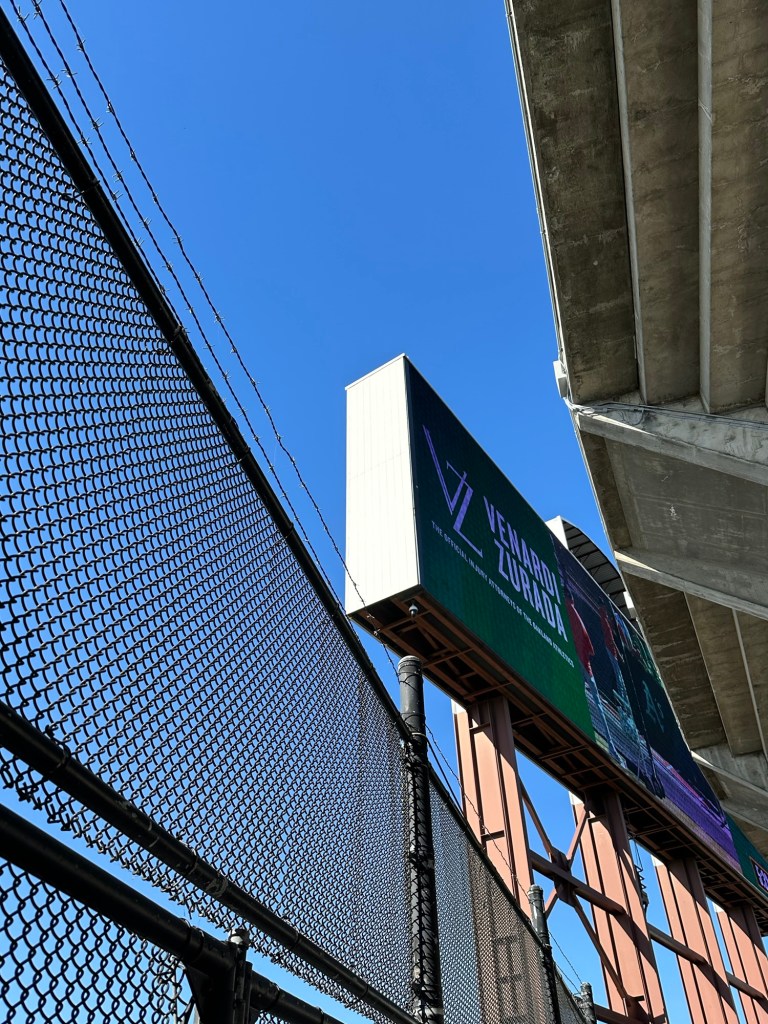
As we went to the upper concourse behind our seats, we discovered more of the same. For starters, we were the only people in sight. All concession stands were closed and clearly had been for quite some time. Various carts were left sitting around. Things had been torn off the walls. Even the restrooms were eerie, with extremely dim lighting and the feeling that I might be the only person to use it the entire game. Of course, the experience wasn’t complete without the barbed wire along the top of the fence to keep people from breaking in. Or was it to keep us from getting out? The entire building gave off dead mall energy. I was anxious to check out the rest of the stadium just to remind myself that we weren’t the only people there.
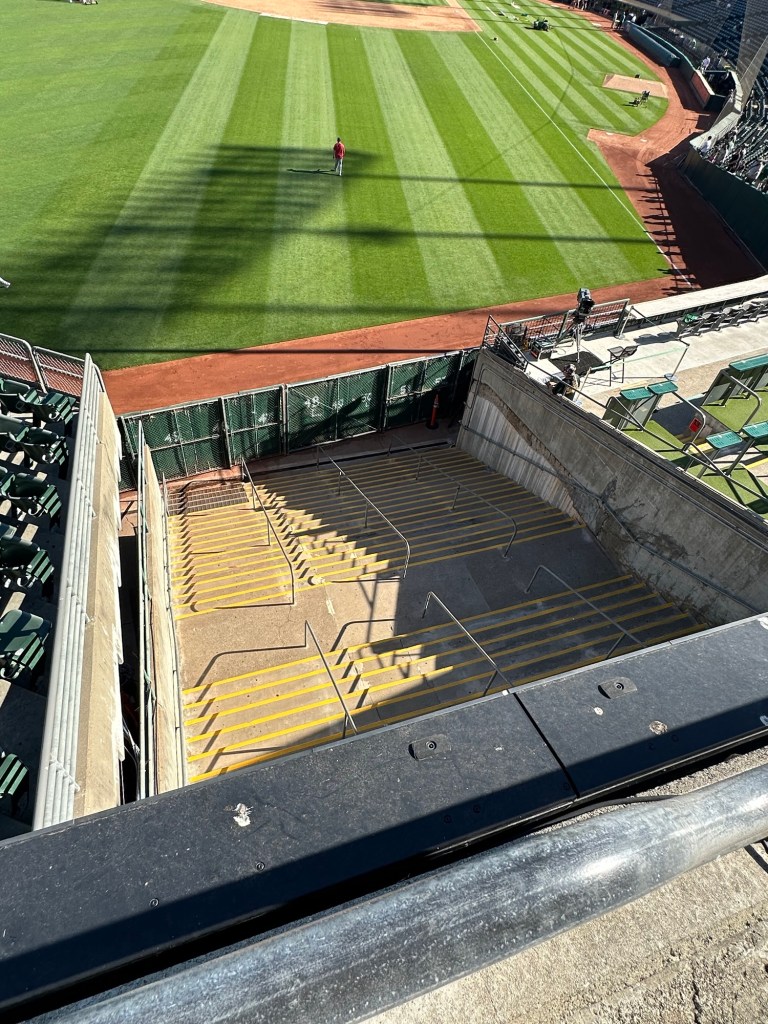
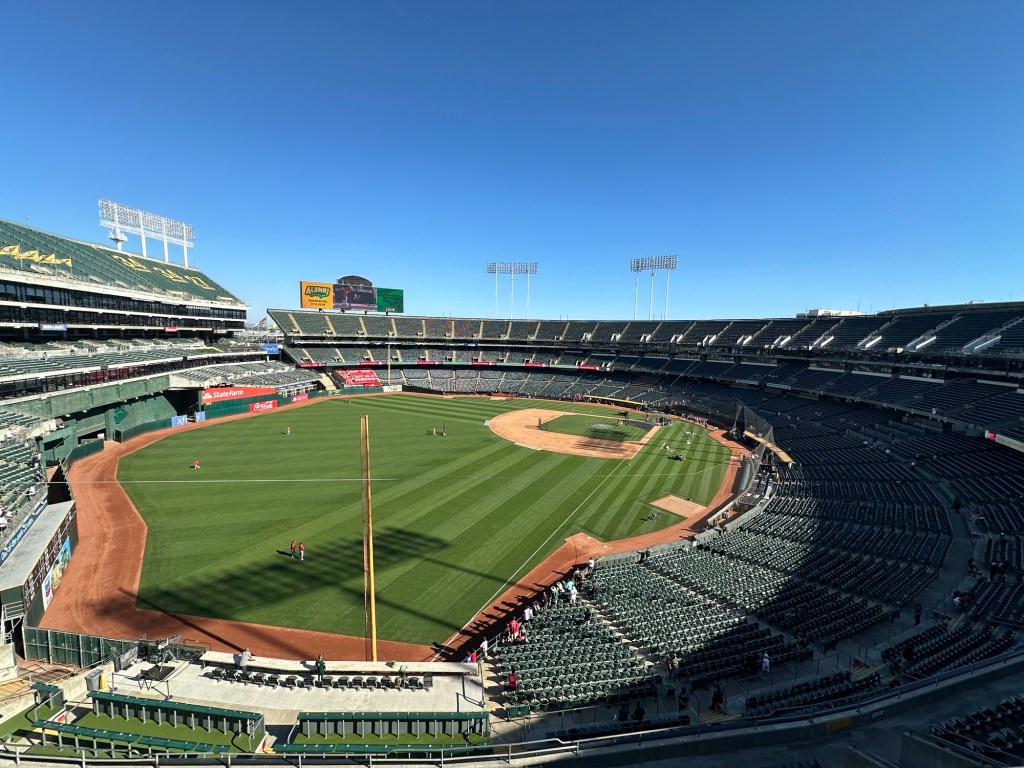
I did enjoy the atmosphere of the outfield seats. There was some nice terrace seating by the foul poles, and Mount Davis featured a nice club area that could be accessed in left field. The walls here, though, were pretty high above the field, so I could see people feeling a bit disconnected from the action if they sat here. Around the entire outfield, there was a considerable gap between the home run wall and the actual seating areas, so a lot of homers wound up being inaccessible to the fans in the stands. While on the topic of the outfield, I’d be remiss if I didn’t mention the two giant staircases in the corners that lead to absolutely nowhere. They never made sense to me growing up, and they made even less sense once I saw them in person. Even when I look back at pictures of the stadium pre-renovation, I cannot figure out the function of these stairs that dead-end at the outfield fences. Maybe they were for field access during concerts?
They had all the concession stands and stores open in the stretch of concourse between first and third base and maybe a handful in the outfield too. But if you were sitting near the corners or in the second or third deck, you’d need to head to one of those areas if you wanted something to eat. The food variety was actually pretty good, but lines could be long since so few places were open.
Because the venue was built for both football and baseball, seats in foul ball territory were generally pretty far away from the field. This was pretty common for stadiums of this era. So once again, it could be easy to feel distant from the action in front of you. We started out with seats on the second deck just beyond third base, but then, despite the abundance of empty stands across the Coliseum, it just so happened that an entire Little League team ended up having tickets directly in front of us. We ended up moving down to the lower level so we could be closer to the field and have a little more space to ourselves. Even though the two teams on the field stunk and the A’s were abandoning them, I was pleasantly surprised by the turnout for a Tuesday night game.
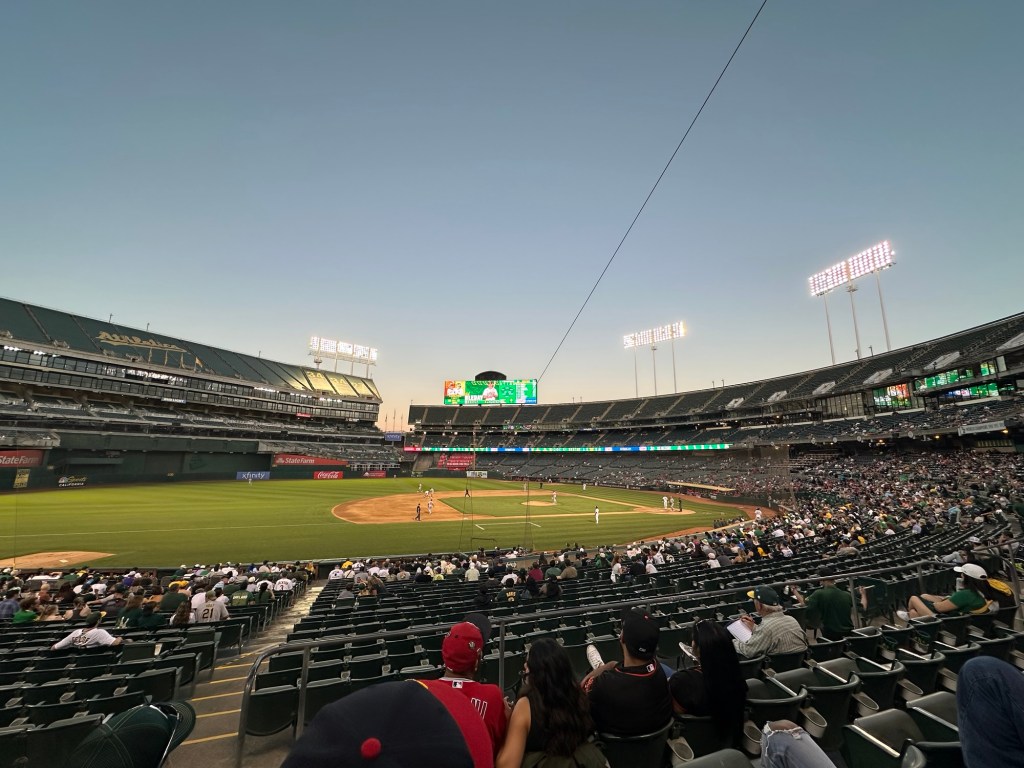
Overall, there are few stadiums in today’s game that could rival the Oakland Coliseum for being the worst in the majors. The whole experience felt like a fever dream in many ways, but at the same time, I thoroughly enjoyed the chance to see it. I doubt I will ever visit such a rundown, decrepit baseball venue again. It was obviously on its last legs. And it was obviously not sustainable for the Athletics to keep playing there for even another five seasons. But it was also obvious that Oakland fans treasured one last chance to see their team play in front of their eyes.
Watching the final game in the Oakland Coliseum on television, it was hard not to feel emotional. As sports fans, we all have our teams that we are dedicated to through good times and bad. It’s hard to imagine the heartache and helplessness of having your hometown team ripped away from you. But the fans kept showing up anyways. The Athletics franchise will soon be moving on to its fourth permanent home, the most of any team, after this temporary stay in Sacramento concludes. Oakland fans aren’t the first to lose their beloved A’s, but I hope they are the last.
I want the Vegas move to succeed. I’m excited to see how their new stadium turns out, and I look forward to my future visit. But I will treasure this opportunity to visit the Oakland-Alameda County Coliseum in its final season of baseball. It’s fair to wonder what could have been had the team gotten a deal done. Now it sits surrounded by a sea of empty parking lots, a reminder of the city’s former glory in the football and baseball worlds. It’s unlikely a team will ever return to the East Bay. However, I have seen firsthand that Oakland fans deserve another chance.
WE WANT TO HEAR FROM YOU:
Thank you for visiting Small World Travel Blog! We hope you enjoyed this sixth review in our MLB Stadium Tour series. Please consider subscribing for more content like this! If you visited the Oakland Coliseum, was your experience similar to ours? What are your thoughts on team relocations? Let us know in the comments, along with which stadium you’d like us to review next!

 Small World Travel Blog
Leave a comment