
Visit Date: May 25, 2024
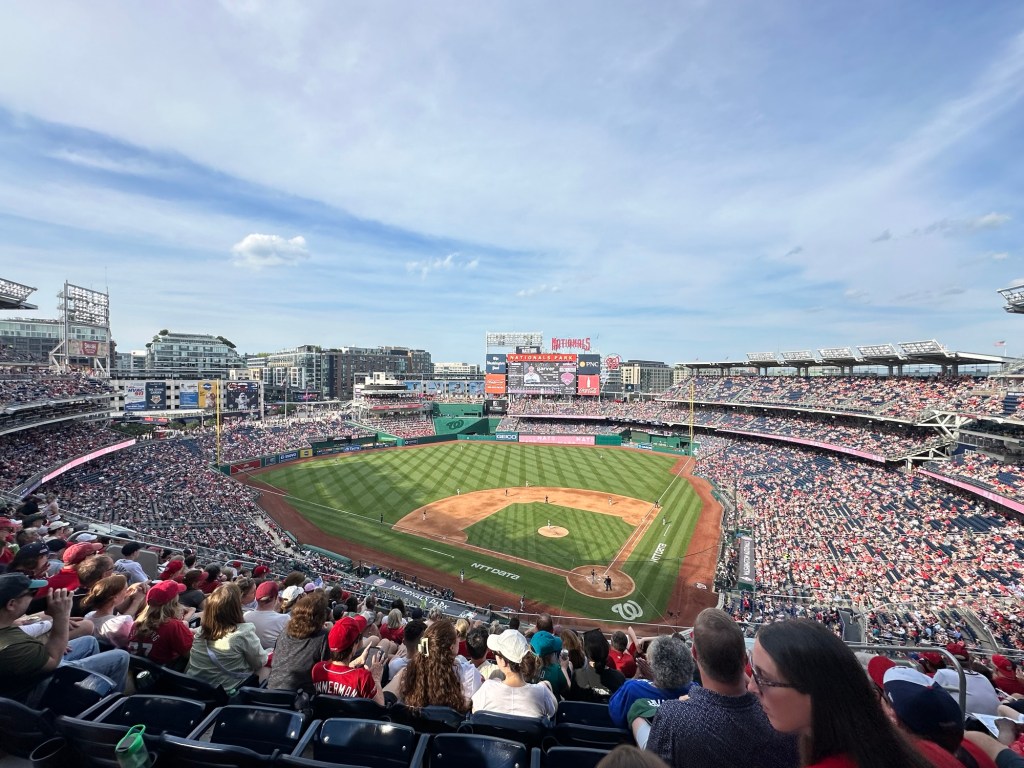
Try to conjure up the most average and nondescript professional baseball stadium in your mind. What would be some of its features? Well for starters, as with most modern ballparks, it would probably feature a lot of exposed steel, rather than brick or stone, as its primary structural element. One side of the outfield will have two or more decks while the other has an open-air, patio concept. The upper deck might have some sort of disconnected, split concept which makes it harder to navigate but creates supposed visual interest. And of course, it would be situated along a river in a hip neighborhood surrounded by high-rise apartments, retail, and restaurants. What I’ve just described to you is Nationals Park in a nutshell.
While not a bad baseball stadium by any means, this ballpark, located in the Navy Yard of Washington, DC, is easily one of the most forgettable. When the Montreal Expos relocated to DC in 2005 and became the Nationals, they played their first three seasons at RFK Stadium. This was always meant to be temporary, though. RFK was a cookie-cutter, mixed-purpose venue that hadn’t had a permanent baseball team since the Washington Senators in 1971. By the time the Nationals moved in, the Redskins had already stopped playing football there for nearly a decade. When Nationals Park finally opened in 2008, it gave the team a much-needed modern facility to call home. But unfortunately, it’s pretty unremarkable.
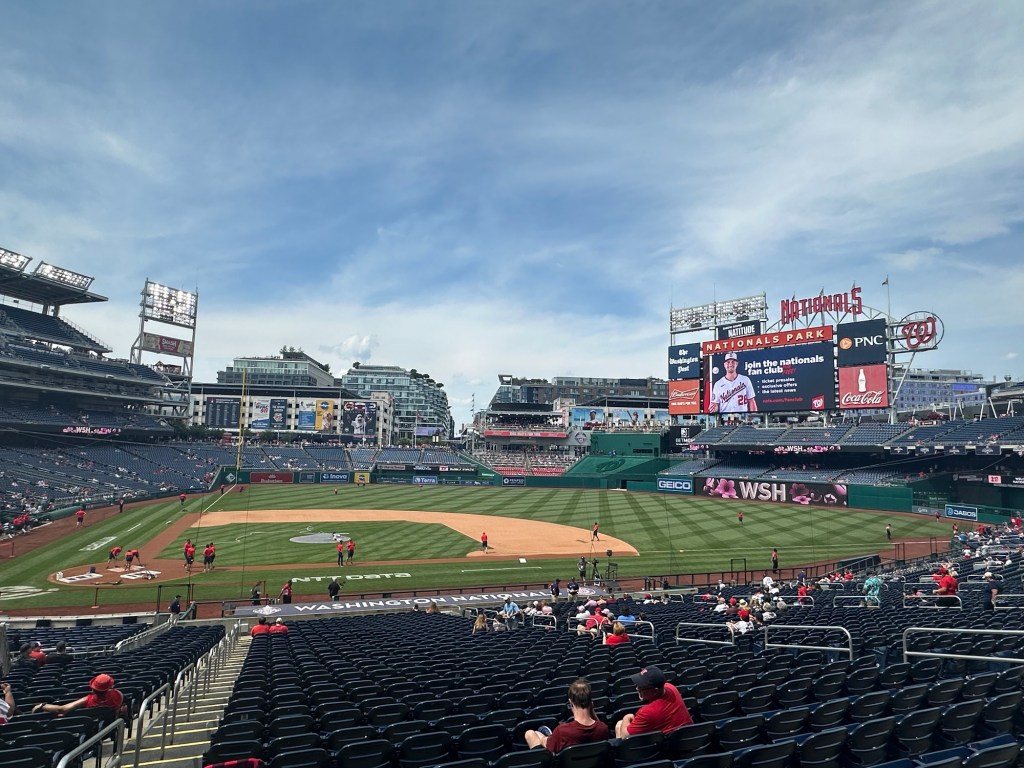
To be fair, there are plenty of things to like about Nationals Park. The stadium’s location a mile south of the US Capitol Building is a major strength. If you find yourself touring around the National Mall, it’s very easy to reach the ballpark on foot. The stadium is well-integrated into the surrounding community. With more and more apartments and dining every year in the Navy Yard, it’s a good example of how local development and major league baseball stadiums can cohesively come together to create a vibrant community. I think there is some missed potential with the stadium’s location along the Anacostia River though, as home plate faces away from the waterfront. While this would’ve been a beautiful backdrop, I can understand why they wanted to face towards the heart of DC instead.
But here’s the problem – all of these new apartments within the community have taken away the views of the US Capitol and the Washington Monument for the majority of fans. You can still catch a glimpse in certain pockets of the ballpark, but it’s a huge missed opportunity. I know that I said that the stadium and community are well-integrated, and while I do honestly believe that this is the case, they really could’ve benefitted from moving these apartments further north by a block or two. Left field also features two huge, drab parking garages covered in billboards that really take away from the backdrop even further. So unfortunately, those are the views you’ll be treated to here, rather than the confluence of the Anacostia and the Potomac.
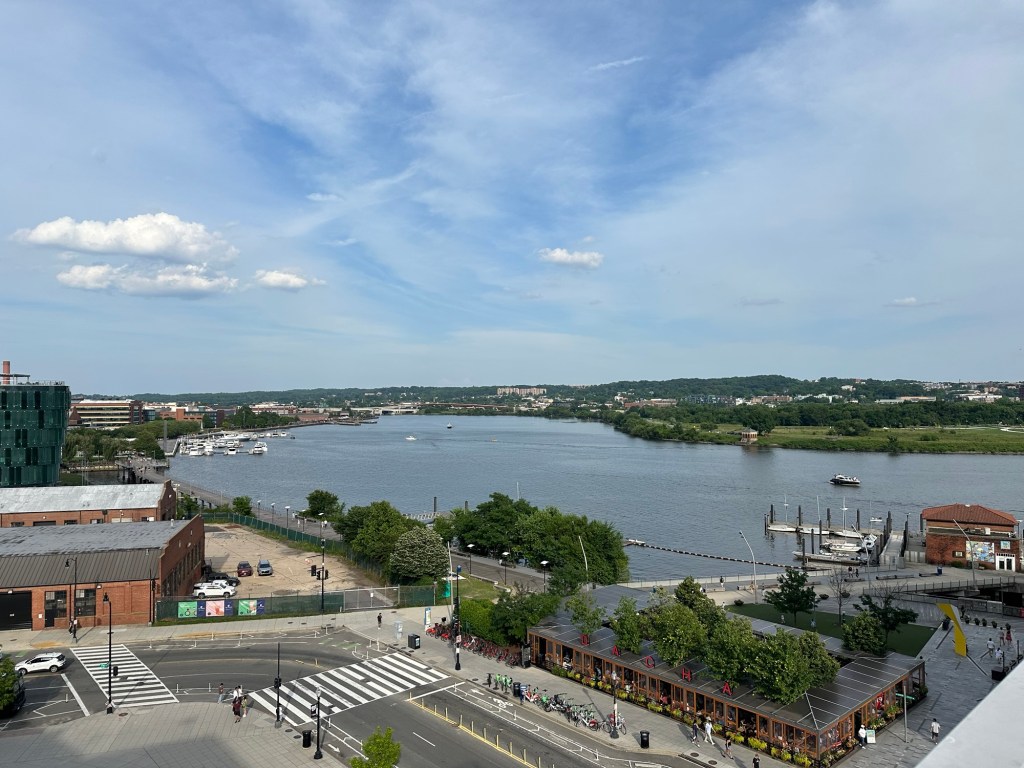
Fortunately, the nearest metro station is only a two-block walk from the center field gate (at the northeast corner of the stadium). For my money, the DC Metro is the best rapid transit system in the country, and the green line’s Navy Yard – Ballpark Station provides easy access to the other belts. We were able to take the green train all the way from the stadium to our hotel in College Park over 30 minutes away, so it was a great option if you’re looking to save some money by staying outside of DC proper or if you live nearby.
We used the aforementioned center field gate to enter Nationals Park, which led us onto an open plaza in the left-center area between the two parking garages. The bottom floor of the rightmost garage houses a large team store, which was really convenient as I searched for a good hat to buy. That day, closing pitcher Kyle Finnegan was signing autographs at the store entrance; I’m not sure if autograph sessions are typical at this location before games, but it was a cool perk for fans who arrived early. They also had some of their President mascots greeting fans out in this area, which was another fun thing to stumble upon.
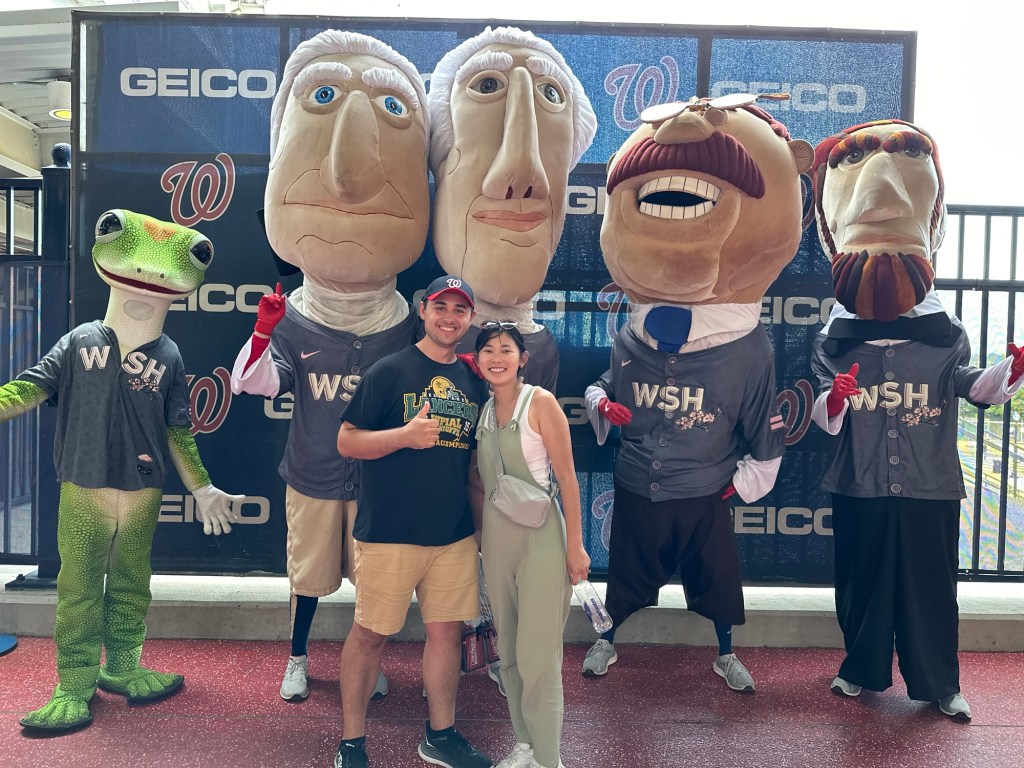
Speaking of Presidents mascots, like many baseball clubs nowadays, the Washington Nationals host a mascot race in the middle of the fourth inning every game. The constants are the Mount Rushmore lineup of George Washington, Thomas Jefferson, Abraham Lincoln, and Theodore Roosevelt, although William Howard Taft, Calvin Coolidge, and Herbert Hoover have also appeared over the years. From their debut in 2006 through October 2012, Teddy didn’t win a single race until the Nationals clinched their very first playoff berth. During our visit, we decided to take a lap around the concourse shortly after the race had ended, and we stumbled upon a great photo op with the whole crew (and the Geico Gecko, for some reason).
The concourses here were pretty decent. On the plus side, they feature open views of the entire stadium as you circle the ballpark, even from the upper deck, since concession stands are all located along the stadium perimeter. This isn’t something that you find at many of the best stadiums in baseball, so I was pleasantly surprised that I could watch the game from just about anywhere since. Food options were also strong as we walked around.
On the other hand, we sat in section 222, which was more difficult to get to than expected. In the upper deck along the first base line, there is a gap between the stands that serves as an overlook. We were seated directly to the right of this gap. The issue (which I’ve run into at other stadiums that have this same feature) was that we couldn’t easily get to the upper deck seats to the other side of this gap. To get to those seats, you have to head up an escalator or ramp instead of just walking straight across. I probably wouldn’t sit in this section again, but I did like the curved design of this deck into fair territory around the right field foul pole.
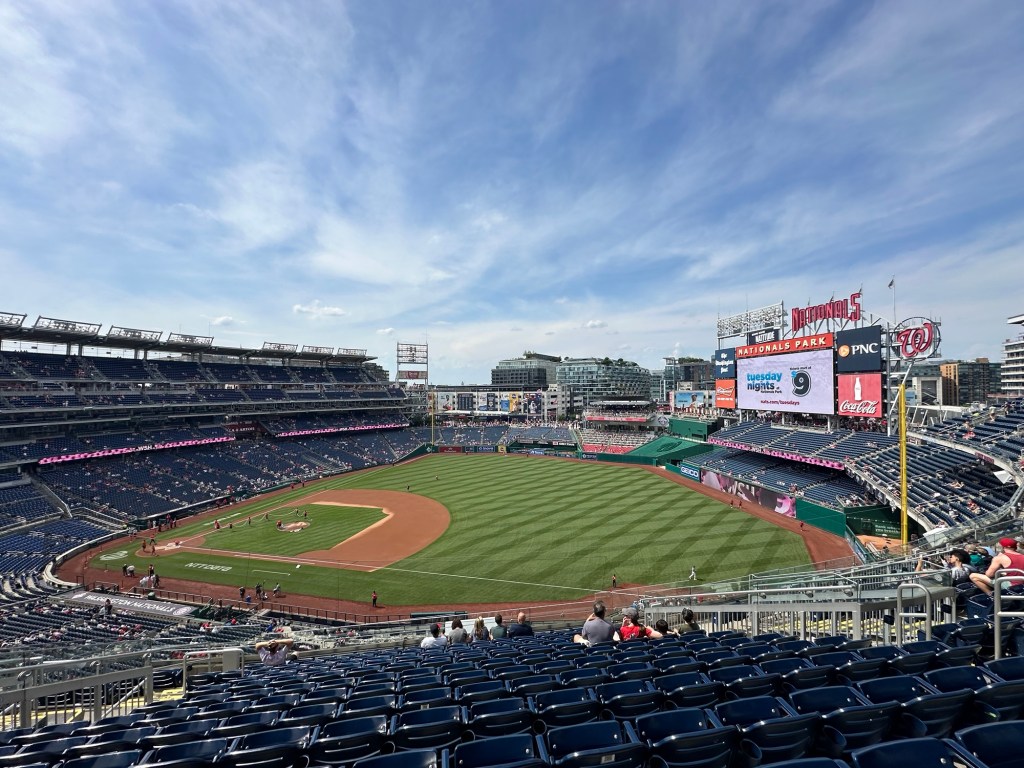
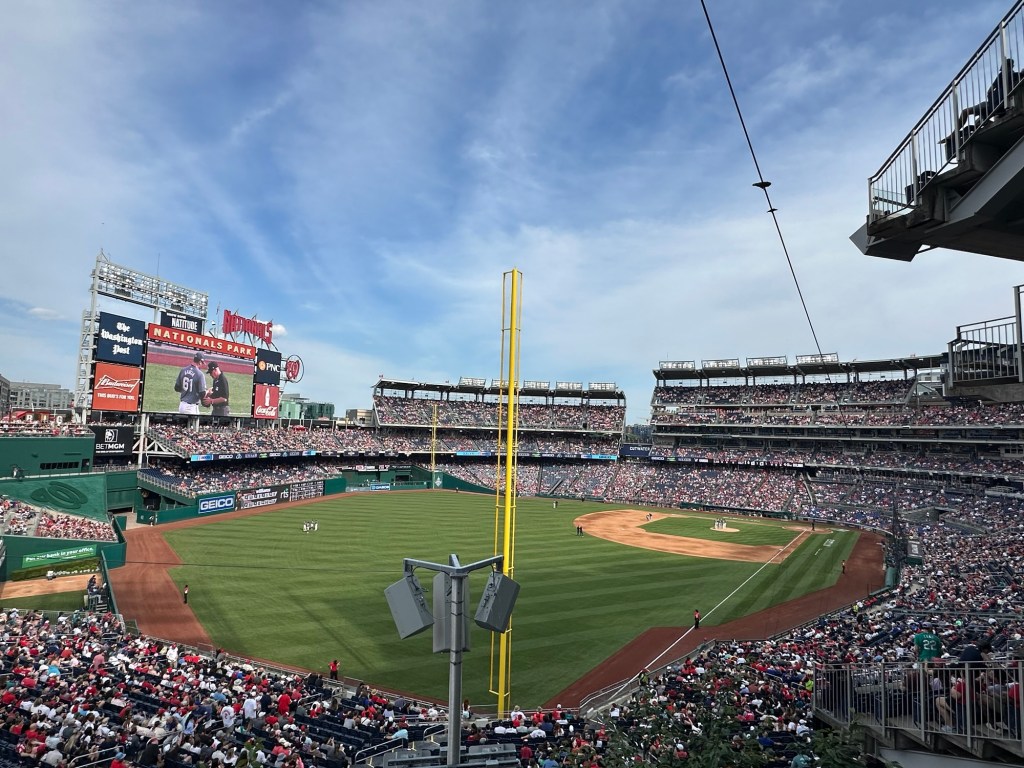
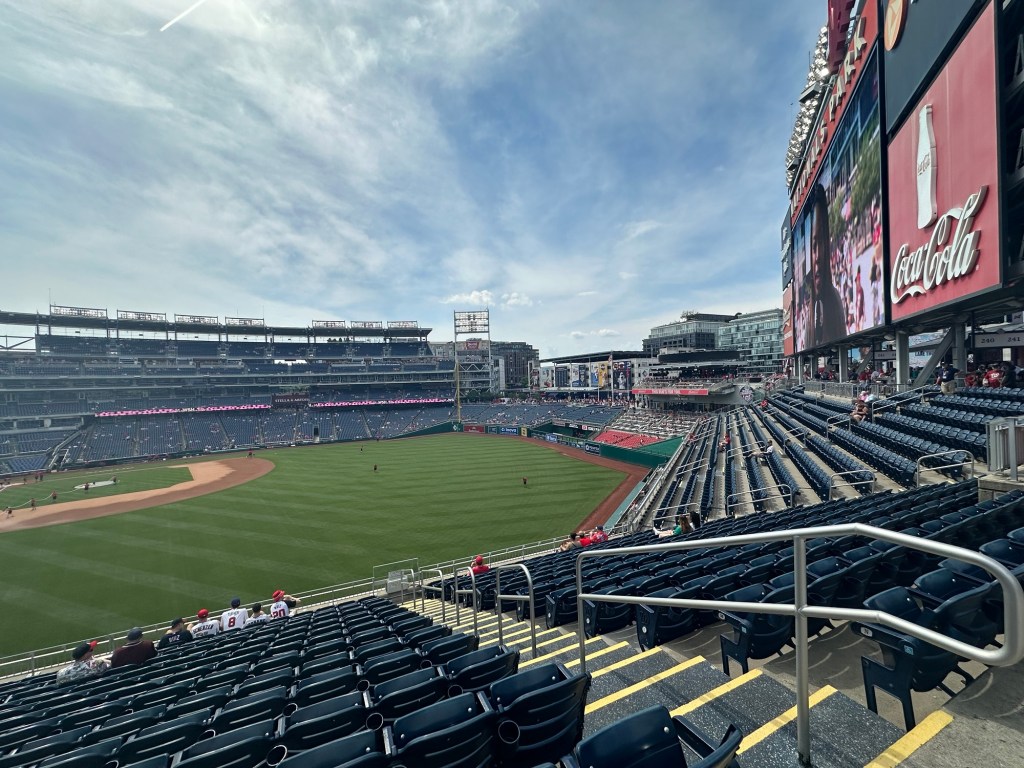
The outfield at Nationals Park is a bit hit or miss to me. I think there are some beautiful sightlines to take pictures, especially in the area right under the scoreboard. Although I don’t like having my back to the board, I wouldn’t mind sitting in the second deck area here in the future just for the views. Left field was great too! But I really didn’t care for center field. The green batter’s eye in straight-away center with the off-centered Nationals logo and the seats high above it was unsightly to me. Creating a bad visual combination, directly next to that was the Budweiser Brew House/Bud Light Loft. Featuring terraced and table-side seating, the curved design of this building looked awkward to me, especially from behind. At the front of these sections are a collection of red seats in a stadium that is entirely navy otherwise, so again, it didn’t fit quite right.
In the end, none of these things make Nationals Park a bad ballpark. But there’s also very little that allows it to stand out as particularly great either. As the first major sports stadium to be LEED-certified green, you can sense a lot of care went into the design elements, like solar panels on top of the parking garages and green roofs above the left field concession stands. And it truly feels like the park was set up with fans in mind, providing nice sightlines from just about everywhere. But there is nothing that really makes the whole place stand out or put it over the top. Things here are good. They’re what you’d come to expect when attending a baseball game. And there’s nothing wrong with that. In a sport full of amazing venues, though, Nationals Park should be regarded as perfectly average in every way.
WE WANT TO HEAR FROM YOU:
Thank you for visiting Small World Travel Blog! We hope you enjoyed this fifth review in our MLB Stadium Tour series. Please consider subscribing for more content like this! If you’ve been to Nationals Park before, what was your experience like? Do you have any questions about the park that we didn’t cover? Let us know in the comments, along with which stadium you’d like us to review next!
 Small World Travel Blog
Leave a comment